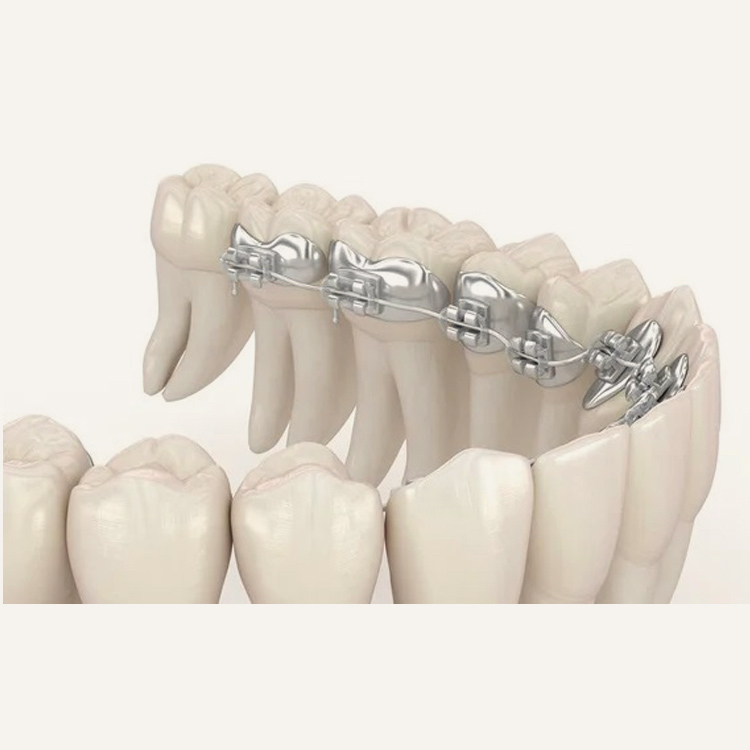
Orthodontic Bracket Failure, also known as "broken orthodontic bracket," is defined as the separation of the adhesive bond between the metal or ceramic bracket bonded to the tooth enamel. Orthodontists classify bracket failure as an acute mechanical failure of a fixed orthodontic appliance. Once the composite resin bond fails, the bracket loosens; either sliding along the archwire or falling completely off. This breaks up the constant calibrated forces necessary for controlled tooth movement and halts the alignment process. Additionally, it creates a risk of soft tissue injury.
Clinical Definition: A loss of adhesion of a metal or ceramic orthodontic brace component from the surface of the enamel.
Indications for Urgency: The archwire pierces through the buccal mucosa (the lining of the inner cheek), extreme pain or the complete swallowing of a bracket.
Treatment Options: Emergency clinical clipping, composite rebonding with 2026 moisture-resistant primer, or replacement of the archwire.
Contextual Information: Due to eating hard foods such as parottas or banana chips, bracket failure occurs more frequently in Kerala.
The patient who experiences a de-bonded bracket immediately notices several physical and tactile differences occurring within their oral cavity:
Float Sensation: The bracket moves freely along the wire as if a bead moving along a string when touched by the tongue.
Visual Displacement: Compared to adjacent teeth, the bracket visually appears to be displaced laterally toward the gum-line or is angled.
Mucosal Irritation: As sharp edges contact the inner cheek or lip areas, localized irritation or ulcerations occur.
Protrusion of Archwire: If the bracket is located at the back (molar band), a portion of the primary archwire protrudes outward and contacts directly with soft tissues.
Although a loose bracket does not constitute a life-threatening condition, there are specific clinical indicators that necessitate immediate treatment by a trained orthodontist within hours:
Wire Poking: The archwire is embedded into the soft tissues including but limited to the cheek, tongue or gums.
Aspiration (Inhalation): The bracket has separated and accidentally entered the respiratory tract, resulting in shortness of breath, coughing, or chest discomfort, which constitutes an immediate medical emergency.
Increased Tooth Mobility: The involved tooth exhibits severe, non-physiological mobility suggesting a root fracture, alveolar bone fracture, or acute luxation injury to the periodontal ligament, rather than standard orthodontic movement.
Bracket failure occurs due to clear reasons related to behavior, mechanics, or systems:
Overload During Mastication: Chewing on very hard local snack foods, such as jack fruit chips, tough meat pieces, etc.
Shearing Force Trauma: An accidental blow to the face during athletic competition or vehicle jarring due to irregular road surfaces.
Failure At Adhesive Interface: Contamination with saliva prior to initial bonding physically blocks the etched micro-pores of the enamel, preventing the composite resin from establishing a secure micromechanical lock.
Parafunctional Habits: Repeated flexing of the bracket-wire interface due to chronic nail biting or pencil chewing.
There are various factors present in some patients which significantly increase their risk for repeated failures of brackets:
Enamel Quality: Patients with conditions such as enamel hypoplasia or fluorosis have compromised enamel structure making it difficult to create sufficient etching patterns for proper bonding.
Deep Bite Anatomy: Teeth structurally overlap excessively downward creating friction between lower anterior teeth and upper brackets during mastication.
Traditional Dietary Habits: Frequent consumption of sticky sweet treats, and/or firm unripe fruits.
Oral Hygiene: Poor oral hygiene habits lead to plaque formation around the base of the bracket releasing acids that gradually deteriorate the bonding resin.
To determine if a breakage occurred, evaluate safely using a mirror:
Cleaning: Dry the tooth and bracket using a clean cotton swab to provide visibility.
Inspection: Visually inspect each bracket for correct positioning. Has it rotated from its central position?
Tactile Assessment: Gently nudge the bracket using a cotton swab tip or clean finger. Does it rotate, slide or lift off of enamel?
Wire Assessment: Evaluate status of primary archwire. Is it bent? Broken? Exposed?
The orthodontist clinically evaluates failure through a precise series of assessments:
Visual Examination & Adhesive Remnant Index (ARI): Clinicians utilize a dental explorer probe to manually verify the stability of all attachments and use the ARI scoring system to evaluate where the bond failed (at the enamel-adhesive or bracket-adhesive interface).
Radiographic Evaluation: Obtain intraoral periapicals or a panoramic radiograph only if there are signs or a history of physical trauma to rule out fractures below the gumline or root damage.
Evaluation Of Pulp Vitality: Conduct thermal or electrical pulp vitality tests after a significant traumatic blow to ensure health of interior nerve tissue.
Orthodontists categorize bracket damage into three distinct levels to prioritize care:
|
Severity Level |
Clinical Presentation |
Required Action |
|
Grade 1: Mild |
The bracket is loose but stays secured to the wire by its elastic module; zero tissue irritation. |
Elective repair; can wait for the next scheduled adjustment. |
|
Grade 2: Moderate |
The bracket slides freely, causing minor wire distortion; edges are starting to scrape the inner cheek. |
Scheduled repair within 48 to 72 hours; apply orthodontic wax. |
|
Grade 3: Severe |
Wire is bent or completely broken and poking into tissue; the bracket is totally detached or swallowed. |
Urgent clinical appointment needed within 12 to 24 hours. |
The repair of a damaged bracket utilizes specific mechanical processes and requires advanced 2026 biomaterials:
Removing Debris: Using a bracket removal pincer the dentist removes all debris left behind when the bracket fails. All residual adhesive is removed from the surface of the tooth using smooth tungsten carbide burs to prevent the damage of the outer layer of enamel.
Rebonding and Re-attaching Bracket: The tooth enamel is chemically etched with phosphoric acid to create micro-pores, while the bracket base is thoroughly cleaned of old adhesive before being coated with a resin primer. Once applied, the bonding agent is exposed to high-intensity blue visible light, allowing the adhesive to quickly polymerize and create a strong micromechanical connection between the bracket and the tooth. While modern primers offer some moisture tolerance, achieving strict isolation and maintaining a dry field are still critical, as saliva or excess humidity during the bonding process will compromise bond strength and lead to premature failure.
Replacing Wire: If the archwire becomes deformed due to the mechanical failure of the bracket, it is replaced with a new niti (Nickel-Titanium) super-elastic archwire. The replacement allows for continued smooth tooth movement.
Orthodontic repairs in Kerala are made according to local material standards and operational tier structures.
Routine In-House Repair: Most city-based private orthodontic practices charge a small additional material cost for minor rebonding ranging from approximately ₹300 to ₹700 per bracket when the initial problem occurs while receiving active treatment.
Emergency Outpatient Care: Depending on whether you need a premium ceramic or self-ligating bracket, visiting a specialty clinic or a high-end multi-specialty practice for an urgent repair could range from ₹1,000 to ₹2,500.
Insurance Coverage: Generally speaking, patients pay out-of-pocket for standard cosmetic treatments and routine repairs because their general health insurance coverage does not usually include such procedures except when a more serious traumatic injury occurred resulting in significant maxillofacial trauma.
Identifying the correct type of practitioner to treat your issue will help ensure timely completion of your treatment plan:
Orthodontist: Experts in understanding structural forces and wire positioning. As the primary specialist responsible for treating orthodontic appliances, only an orthodontist is qualified to replace and re-bond a failed bracket.
Dentist: Qualified professionals that can cut back a long, poking wire or remove a loose bracket during a night-time emergency in order to provide temporary comfort until your orthodontist becomes available.
Oral Surgeon/Endodontist: Only needed in extreme cases involving major trauma that resulted in fractured portions of your lower jaw bone(s), or severe trauma that caused root fractures necessitating a root canal.
Your timeline is based upon how uncomfortable you feel and what stage of your treatment you were in at the time of the breakage:
Immediately (within 2 – 4 hours): A sharp wire has penetrated your cheek/gum tissue, bleeding continues and you don’t know what to do.
Quickly (within 24 – 48 hours): Your main tooth responsible for supporting elastic bands breaks off; if you delay further, you risk losing some forward momentum toward realignment.
Non-emergency (anytime within 7 – 10 days): The bracket broke but remains securely attached to the rest of your appliance causing no discomfort; also, close to completing your active treatment schedule.
What should I do if I inadvertently swallowed my braces?
Don’t panic. The brackets themselves are relatively small; they are non-toxic; they are designed to pass through your stomach/digestive tract without producing any adverse effects. But if you immediately begin coughing, find yourself having trouble breathing, or develop acute chest pains, call emergency services asap as there may be some chance that the bracket has traveled down your respiratory tract into an air passage and needs to be surgically removed immediately.
Should I attempt to fix a loose bracket using super glue purchased at an office supply store?
Never. Household adhesives used inside the mouth pose serious risks including possible permanent damage to your teeth and irritation to soft tissue areas. Moreover, commercial adhesives do not produce the level of micro-lock necessary for proper orthodontic movement, nor would Application of same make future cleaning of the area difficult for your dentist.
For how long can I wait to get my broken bracket repaired?
You can likely wait anywhere from 1 to 2 weeks before needing to return to your dentist if you’re not currently feeling any discomfort or sharpness from loose wires. Notify your dental provider about the break as soon as possible so that they can extend your visit time for the necessary re-bonding procedure.
From a clinical perspective, a broken bracket isn't just a minor inconvenience—it changes the way physical forces are distributed across your entire jaw. When one point fails, adjacent teeth take on unexpected, uncontrolled pressure, which can stall your alignment progress by weeks. The key to long-term success lies in patient compliance: avoiding hard local treats like banana chips, maintaining excellent oral hygiene, and using orthodontic wax to protect your cheeks the moment a component feels loose. Treating your appliance with care directly ensures a faster, smoother path to a healthy smile.



.jpg)
.jpg)
.jpg)
.jpg)
.jpg)
.jpg)
.jpg)
.jpg)
.jpg)
.jpg)
.jpg)
.jpg)
.jpg)