Premature loss of a deciduous tooth from injury, advanced decay, or systemic issues that necessitate forced removal or avulsed tooth extraction can occur. Deciduous teeth function as natural spacers in addition to guiding channels for the eruption of their corresponding permanent successors. As such, premature loss of a primary molar or incisor creates space for adjacent teeth to shift into that vacancy and subsequently lead to an anterior-posterior collapse of the dental arch, creating severe malocclusions and impacting the development of permanent teeth. Early loss of primary teeth falls within both developmental arch disruptions and pediatric dental trauma classifications within pediatric dentistry.
Clinical Definition: Loss of a primary tooth prior to the expected time frame of physiological resorption of roots and/or eruption of the permanent tooth.
Indicators That Require Urgent Treatment: Excessive uncontrolled bleeding, significant swelling, fever, extreme discomfort/pain, and exposed bone.
Most Common Causes: Most common causes of premature loss of primary teeth include ECC (early childhood caries), traumatic injuries sustained during falls or sports-related injuries, and chronic localized periodontitis.
Main Recovery Options: Band-and-loop space maintainers, crown-and-loop devices, functional removable appliances, and clinical observation.
Primary Tooth Loss Prior to Expected Time Frame: A gap exists in the top row or bottom row with a tooth having been lost prior to the normal shedding time for that specific tooth (usually between six and twelve years old).
Swollen Gums: Inflammation around the gum tissue where the tooth is missing; redness; swelling; and/or bleeding when applying gentle pressure.
Discomfort / Pain When Eating: Refusal to eat on the same side as the missing tooth.
Difficulty Pronouncing S and Z Sounds / Lisping: Early loss of teeth will result in difficulty pronouncing these letters. Also, possible changes in speech patterns can occur depending upon which front primary incisor has been lost.
Teeth Drift: The adjacent molar will tip forward slightly or rotate into position over the empty socket space.
If you notice one of the following signs/symptoms, call a pediatric dentist immediately:
Active Infection / Pus Leaking: Active infection/pus leaking from the socket area.
Severe Facial Swelling: Severe facial swelling (or) lip (or) cheek swelling indicates severe cellulitis.
Traumatic Loss with Systemic Symptoms: A traumatic tooth loss occurred in conjunction with head trauma, nausea, or dizziness.
Inability to Swallow Liquids: Your child cannot drink liquids or swallow because of extreme pain in the local area.
Uncontrolled Bleeding: The bleeding continues from the socket after twenty minutes of using firm gauze pressure.
Early Childhood Caries (ECC): Caused by excessive sugar liquid consumption (e.g., juice, soda), early childhood bottle use at night, and other causes of high sugar frequency in the mouth, ultimately causing structural deterioration of the tooth's surface area.
Traumatic Tooth Loss: Often results when a child falls off their bike, gets hit with an object (such as a ball), or is involved in some form of physical activity where they lose control of their body or fall; this can result in either an avulsed tooth (the tooth has been knocked completely loose) or fractured tooth that will have to be removed due to the inability to restore it.
Localized Periodontal Deterioration: Results from a severe infection that destroys the elastic fibers known as the periodontal ligaments that attach the roots of teeth to the surrounding alveolar bone.
Cracks from Biting into Hard Food Items: Can occur when children accidentally crack or chip a tooth while eating hard food items such as uncooked candy, hard rock sugar (sharkara), or raw jaggery
Frequent Consumption of Sticky Sweets and Refined Sugars: Frequent snacking on refined sugars and sweetened condensed milk contributes to creating a large number of bacteria on your child's teeth, resulting in frequent carious lesions and eventual loss of teeth.
Poor Oral Hygiene: Lack of parent involvement in daily oral hygiene routine and failure to provide fluoride treatments contribute to poor oral hygiene habits.
Systemic Conditions: Hypophosphatasia, Papillon–Lefèvre syndrome, and severe immune deficiency all contribute to systemic conditions that compromise the support of the alveolar bone and create risk factors for losing teeth.
Tooth Enamel Defects: Weaknesses in tooth enamel cause children to experience rapid decay and are most often related to congenital defects including enamel hypoplasia.
Inspect your child's mouth using a clean mirror and sufficient light according to the following steps:
Wash your hands with soap and warm water.
Carefully lift up the top of your child's lip. Look at the gum where there are no baby teeth.
Check for any sharp pieces of bone, roots from baby teeth that did not come out properly, or any continuous oozing of blood in the gum area.
Gently push on the teeth next to where the baby tooth was located to check if those teeth have moved, or if they now seem wobbly.
Warning: Do not use an unsterilized tool to try and pull out bone bits, or try to take out remaining parts of baby tooth roots yourself.
When a pediatric dentist diagnoses premature tooth loss, they perform specific diagnostics to evaluate:
Visual & Tactile Examination: The healing of the soft tissues, the space within the arch, and how stable the teeth next to the lost baby tooth are.
Digital Radiography (X-Rays): This includes intraoral periapical (IOPA) or panoramic X-rays to identify whether the replacement tooth has grown into its space, what stage of root growth it is in, etc.
Space Analysis: Measure arch length and measure how much "space" was lost due to premature loss of a baby tooth; then estimate possible future crowding.
Class 1 (Minimal — Only an Incisor Lost): The patient has lost their upper or lower primary incisors. While the aesthetic impact may be considerable, there will be little structural space loss in this type of dental loss. Speech will be impacted temporarily as well.
Class 2 (Moderate — One Molar Lost): The patient has lost one of their primary molars. In order to avoid closing off the area that will eventually house a permanent premolar by allowing the two remaining teeth to drift forward, space maintenance is required.
Class 3 (Severe — More Than One Tooth Lost / Arch Collapse): When the loss of more than one post-primary tooth results in the collapse of the arch and a substantial reduction in the vertical dimension of occlusion, along with a significant amount of space being closed and, therefore, significantly diminished chewing ability.
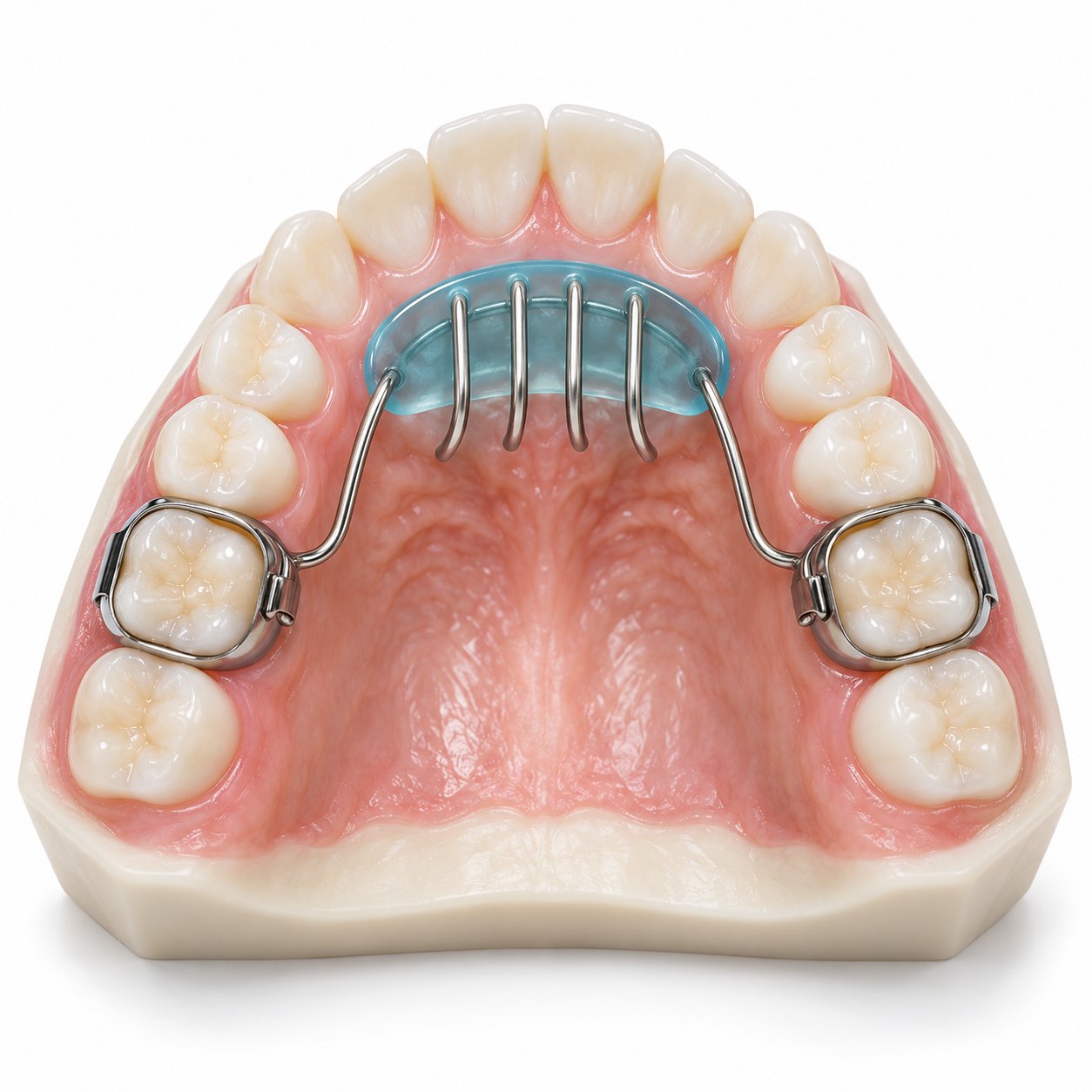
Band-and-Loop Fixed Space Maintainer: A custom-fabricated stainless steel band is fitted around the adjacent tooth. This band contains a metal loop which rests against the adjacent tooth. This maintains the width of the socket which prevents the adjacent tooth from moving into the empty space.
Crown-and-Loop Device: If the tooth adjacent to where the primary tooth was located needs a stainless steel crown for caries, then a crown-and-loop device can be applied.
Distal-Shoe Maintainer: A distal-shoe maintainer is typically indicated when a patient loses their primary second molar prior to the eruption of their permanent first molar. The distal-shoe maintainer guides the unerupted tooth into proper alignment.
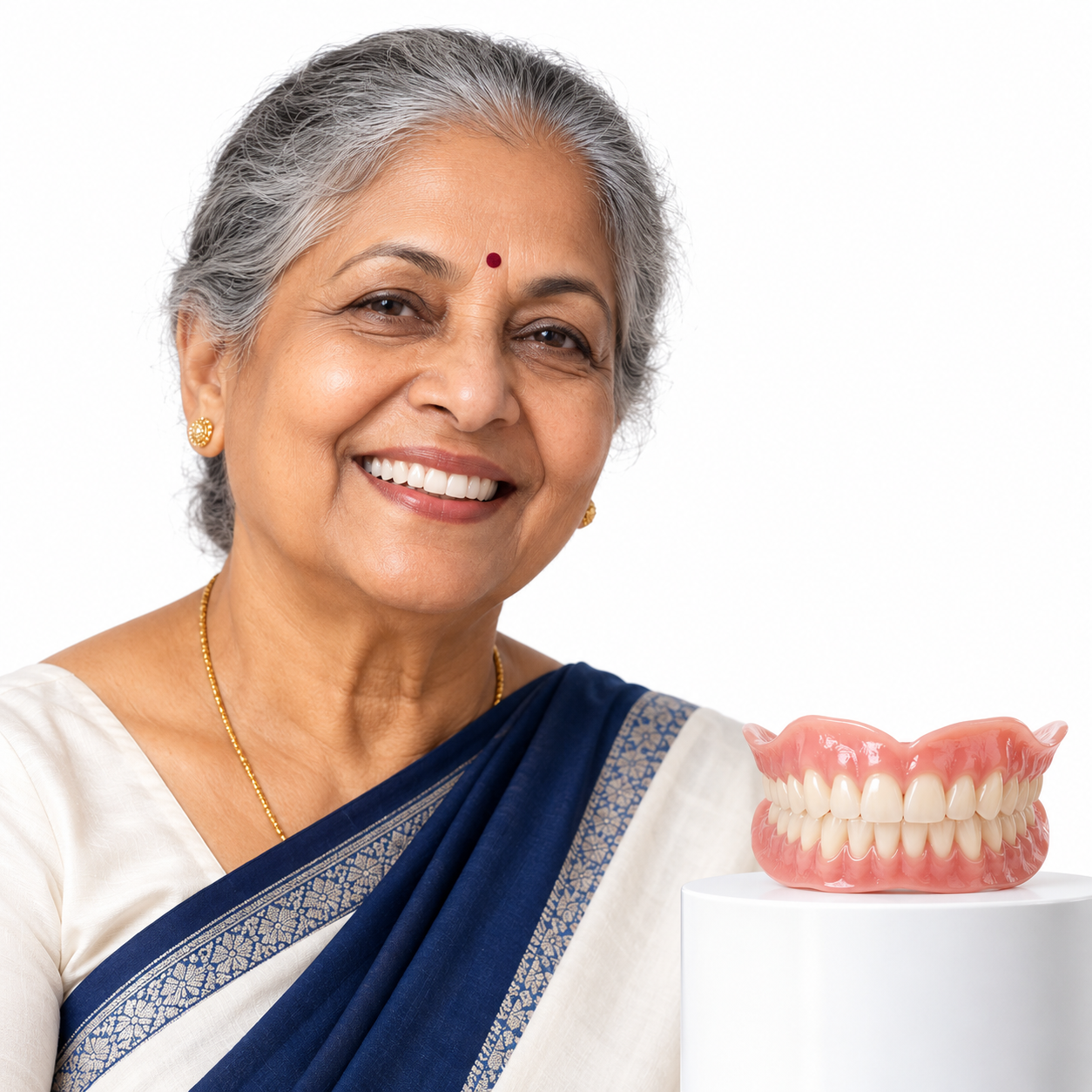
Pediatric Denture (Acrylic Functional Removable Appliance): Pediatric dentures made of acrylic material are removable appliances that replace several lost anterior or posterior teeth. They restore both functional chewing and speech.
The cost of pediatric dental services in Kerala is determined by the type of appliances needed as well as the level of the clinic's equipment:
Digital X-Rays / Clinical Consultation: ₹500–₹1,200
Space Maintainers with a Fixed Band and Loop: ₹2,500–₹5,500 each
Space Maintainers with a Crown and Loop: ₹3,500–₹7,000 each
Pediatric Removable Appliances: ₹4,000–₹9,000
Funding for Services: Routine space maintainer services that are provided to children typically are paid for out of pocket by families; however, some private health insurance programs and/or school-based health insurance plans do provide coverage for an emergency traumatic extraction and/or surgery.
Primary Specialist: A pediatric dentist (pedodontist) will be responsible for managing all aspects of a child's oral development, including providing advice on how to manage their behavior when receiving treatment, in addition to tracking arch development.
Consulting Specialist: An orthodontist can be consulted if there is significant space loss or arch collapse prior to the application of active space-regaining devices.
Additional Specialist: An oral and maxillofacial surgeon can be consulted for more complex cases involving surgically extracting retained roots from teeth that have been lost or for managing traumatic injuries affecting the face.
Emergency Treatment (1 to 4 Hours): For children with traumatic avulsion, those experiencing bleeding from their gums due to injury, or suspected jaw fracture.
Urgent Treatment (24 to 48 Hours): If your child is experiencing severe throbbing, swelling around the face, or local infection, or if they have developed a localized dental abscess.
Elective Follow-Up (7 to 14 Days): A follow-up visit to evaluate the necessity for space maintenance appliances after a non-infected removal of a primary tooth has been performed as part of an established treatment plan.
Is there a possibility that my child will require a space maintainer if one of his/her baby front teeth falls out prematurely?
Yes, however it would be rare. Premature loss of the front baby teeth (central incisors) rarely results in enough space loss since adjacent teeth do not frequently shift forward. The main reason for using space maintainers is to compensate for lost primary molars.
How long will my child's space maintainer remain in place?
The appliance remains in place until the permanent successor tooth begins to develop and protrude through the gum surface. Once this occurs, the orthodontic/dental professional will remove the space maintainer.
Are baby teeth able to be replanted into their sockets if they are knocked loose by a child?
No. Replacing an avulsed baby tooth into its socket may lead to fusing the tooth to the surrounding bone, causing damage to the developing permanent tooth bud located below the root socket.
Early loss of baby molars will be at an important time in a child's dental growth. Removing baby molars too early that are keeping open space, and removing them before placing appliances can lead to severe secondary crowding, impacted lower first premolars, and eventually a lifetime of problems with your child's bite. Today, children's (pediatric) dentists want to keep as many of their primary teeth for as long as possible. If baby molars are lost prematurely because of trauma or severe decay, the best way to protect the shape of the upper and lower jaws, and make future orthodontic treatment easier is to have custom-designed space maintainers fitted as soon as possible. The best way to prevent this from happening in the first place is by having regular bi-annual pediatric checkups to help maintain a healthy developing arch.


.jpg)
.jpg)
.jpg)
.jpg)
.jpg)
.jpg)
.jpg)
.jpg)
.jpg)
.jpg)
.jpg)
.jpg)
This site is part of the DEC Dental Network — a Dental Equity & Connectivity ecosystem of clinical, educational, and patient-support brands operated by Team Dental Pvt. Ltd. Our network works as one — guiding you from your first search to your final smile.
© 2026 Team Dental Pvt. Ltd. · Founded 2013, Angamaly, Kochi, Kerala
About DEC Dental