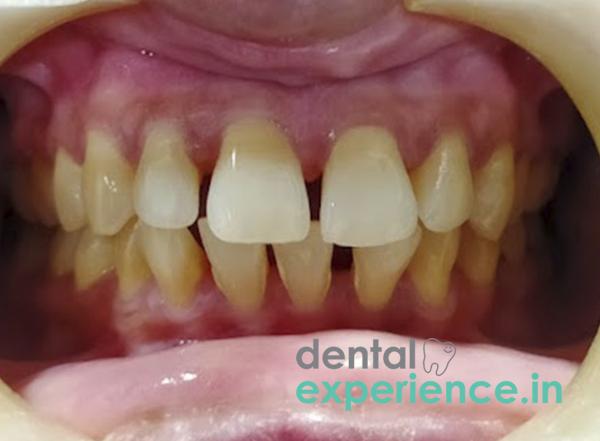
Protrusion of the upper jaw (maxilla) or flaring of the front teeth is a type of functional and aesthetic malocclusion commonly referred to as flared or protruding upper front teeth. From an Angle's classification perspective, it falls within Angle's Class II Division I. It is characterized by the abnormal forward projection of the upper anterior teeth toward the lip. A direct consequence of the abnormal positioning of the upper anterior teeth is a disruption of the standard incisal guidance and overjet values.
As a result of either a skeletal or dental disparity or a combination of both, the protruded upper anterior teeth compromise the protection of the oral cavity, render the exposed enamel matrix susceptible to dehydration, and redistribute the biomechanical forces exerted by mastication throughout the dental arches.
Definition: Excessive horizontal overlap (overjet) of the upper front teeth past the lower teeth, resulting in an excessive labial inclination of the upper front teeth.
Common Complications / Functional Indicators: Poor closure of lips (inadequate lip competence); lisp; difficulty articulating certain words; repeated traumatic injuries to the upper central incisors, localized recession of the gums associated with chronic mouth breathing.
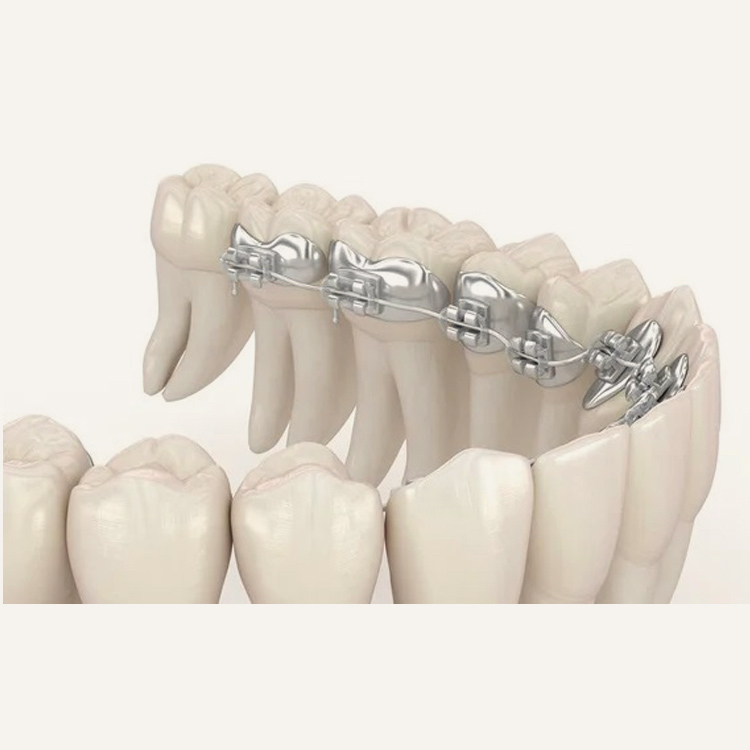
Common Treatment Alternatives: Fixed orthodontic appliances using metal/ceramic brackets; clear removable orthodontic aligners, Temporary Anchorage Devices (TADs), cosmetic porcelain veneers, surgical correction of the jaw (orthognathic surgery).
Prevention Methods: Early detection of non-nutritive sucking behaviors such as thumb sucking or tongue thrusting in children; early initiation of myofunctional therapy.
Individuals who suffer from protruded front teeth will consistently encounter different types of physical, visual, and sensory symptoms each day. For example, visually, the upper anterior teeth occupy most of the space in the smile profile. The majority of times they sit right atop the lower lip which creates a phenomenon called "lip entrapment". Sensory-wise, the lingual aspects of the upper anterior teeth almost never come into contact with the incisal edge of the lower anterior teeth when eating thereby creating an inefficient chewing process.
The surrounding soft tissues also undergo significant alterations. Typically, there is a groove or chapping of the lower lip as it gets wedged behind the projecting maxillary incisors to form an oral seal. Moreover, individuals often note a dry and coarse feeling upon waking in the morning on their frontal enamel matrix. This usually happens because the lips do not cover up the dentition while sleeping thereby evaporating off the protective salivary film forming on their teeth.
Even though minor flaring is mainly a cosmetic issue, there are several clinical indicators that necessitate prompt orthodontic treatment to prevent permanent damage to the surrounding soft tissue:
Flared teeth display mobility during biting: Although slight movement of flared teeth during biting does not require treatment immediately, if they show progressive mobility as well as slight angulation during biting then this indicates that excessive unaligned occlusal forces are being applied to those teeth and ultimately loading the periodontal ligament (PDL). Consequently, localized bone loss is occurring.
Recurring mouth breathing and recurring gingivitis: Protrusion of teeth typically causes insufficient lip sealing. Therefore, recurring mouth breathing leads to dehydration of the anterior gum tissues. Absence of saliva's inherent antibacterial characteristics results in recurrent inflammation of gum tissues including redness and spontaneous hemorrhaging.
Speech/limited masticatory dysfunction: If someone has trouble articulating sounds that include 'S' & 'Z', or if he/she cannot cut food neatly, then he/she has extreme functional misalignment that could lead to temporomandibular joint dysfunction (TMD).
There are many reasons why teeth can be flared outward:
Genetic/Skeletal Disparities: Due to genetics, some people are born with a smaller lower jaw (micrognathic mandible) or an overdeveloped upper jaw (maxillary protrusion) than others. Therefore, their upper anterior teeth seem extremely flared outward compared to their lower dentition.
Non-Nutritive Sucking Behavior: Children that continue to suck on thumbs/pacifiers beyond age 3 continue to apply low-pressure mechanical stress to the developing alveolar bone. That continued low-level pressure eventually shapes the soft palatal tissues and tips their anterior teeth outward.
Tongue Thrust Habit: Instead of placing its surface against the hard palate during swallowing, people with a tongue thrust habit place its muscle mass forward against the back of their upper incisors thus forcing their teeth outward.
Obstructive Nasopharyngeal Airway: If someone has obstructed nasal airflow due to large adenoids or a deviated septum in their nose then they will need to breathe through their mouth. As a result, they will continually drop their jaw and allow their upper arches to fall into a narrower V-shaped configuration that places their upper incisors in an extreme labial direction.
Some risk factors increase likelihood of occurrence or exacerbation of flared dentition:
Advanced Periodontal Disease: As periodontal disease degrades both the alveolar bone and fibers of the periodontal ligaments then teeth will lose their bony support structures and migrate outward under normal lip/tongue pressures.
Large Tongue Volume/Macro-Glossia: A large tongue continuously applies downward pressure onto all dental arches.
Posterior Bite Collapse: The loss, advanced wear, or extraction of back teeth (molars and premolars) without timely replacement causes a loss of vertical dimension. When the back teeth can no longer support the bite, the heavy chewing forces are shifted entirely to the front teeth, pushing them forward and causing secondary flaring.
Although you should consult an experienced dentist prior to attempting any self-assessment regarding your dental alignment, here is a simple method to assess your dental alignment at home without inflicting harm to yourself:
Visual Profile Assessment: Hold a hand mirror beside a full-length mirror and stand sideways while relaxing your entire face. Then bite gently on your posterior teeth while looking at how much your upper front teeth extend beyond your upper lip and how far back your lower lip extends relative to your protruded upper anterior teeth.
Lip Seal Evaluation: Naturally close your mouth. Are you having to actively strain your chin muscles (which creates dimpling in your chin area) in order to get your lips together? If yes, then you probably suffer from incompetent lips as a result of your dental protrusion.
Measure Incisal Space: Clean a standard small ruler or use a clean dental mirror handle. Place your index finger behind your upper front teeth vertically and bite gently on your posterior teeth. If you feel that your incisal space width exceeds a common pen tip thickness (approximately 2-3mm), then your overjet is clinically excessive. Avoid placing pressure on your teeth as this could irritate your pulp chambers.
An accurate diagnosis depends upon numerous clinical evaluations and sophisticated diagnostic tools to identify whether your protrusions occur solely from dental displacements or are part of larger skeletal deformations:
Orthopantomographic Images (OPGs): Your OPG images provide valuable information about overall dental health and morphology of roots.
Lateral Cephalometric Images: These images help calculate precise angular measurements related to your skull structure to determine extent of any bone anomalies.
Intraoral 3-Dimensional Imaging: Advanced computer imaging provides digital representations of your intraoral environment and provides detailed spatial coordinates for each tooth's enamel matrix and each dental arch.
Thermal/Pulp Vitality Tests: If one particular flared tooth exhibits unusual coloration and/or sensitivity, thermal/vitality tests are performed to ensure that pulp chambers within that tooth remain healthy.
|
Classification Levels |
Degree of Overjet |
Common Clinical Findings |
Common Therapeutic Modalities |
|
Level 1 Mild |
3 – 5 mm |
Upper incisors minimally displaced, mild or no lip strain, no adverse effects on speech articulation. |
Combination procedures consisting of interproximal reduction (IPR) + Clear Aligners/Cosmetic Bonding. |
|
Level 2 Moderate |
5 – 8 mm |
Increased labial displacement, lips can close but require active muscle straining, localized xerostomia (dry mouth), limited gingival health. |
Use Ceramic/Metal Brackets in conjunction with possible removal of two upper premolars. |
|
Level 3 Severe |
> 8 mm |
Extreme skeletal disparities, severe, structural lip incompetence, speech affected by lisping, increased risk for incisor trauma. |
Orthognathic jaw surgery in conjunction with Temporary Anchorage Devices (TADs). |
Treatment for flared upper front teeth depends on state-of-the-art biomaterials along with engineering techniques designed specifically according to level of severity:
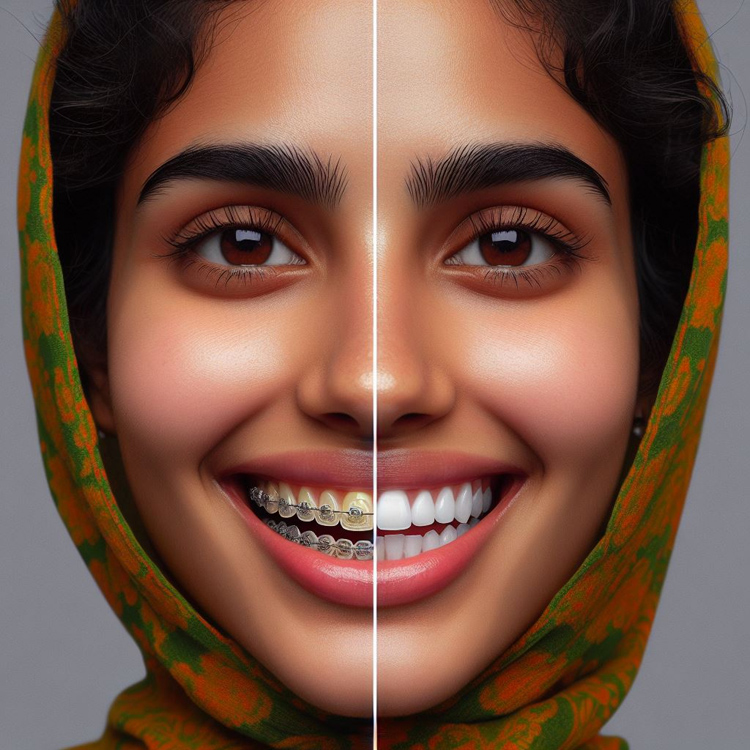
Fixed Orthodontic Appliances: Using NiTi wires that retain memory for applications of constant, low forces, fixed appliances utilize both metal or esthetic ceramics for bracket attachment. By slowly retro-clining the flared front teeth back into proper anatomical location, these appliances restore proper incisal guidance and reduce overjet values.
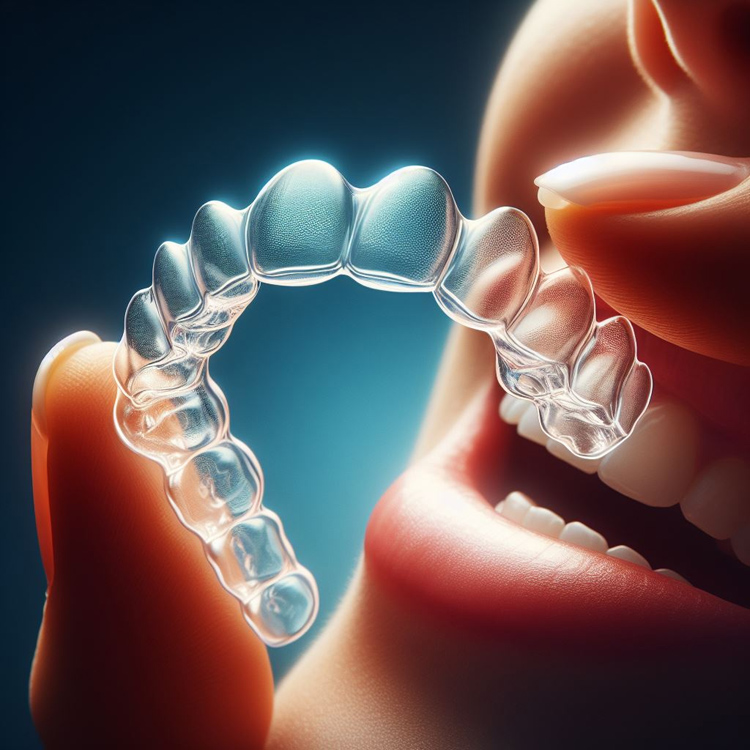
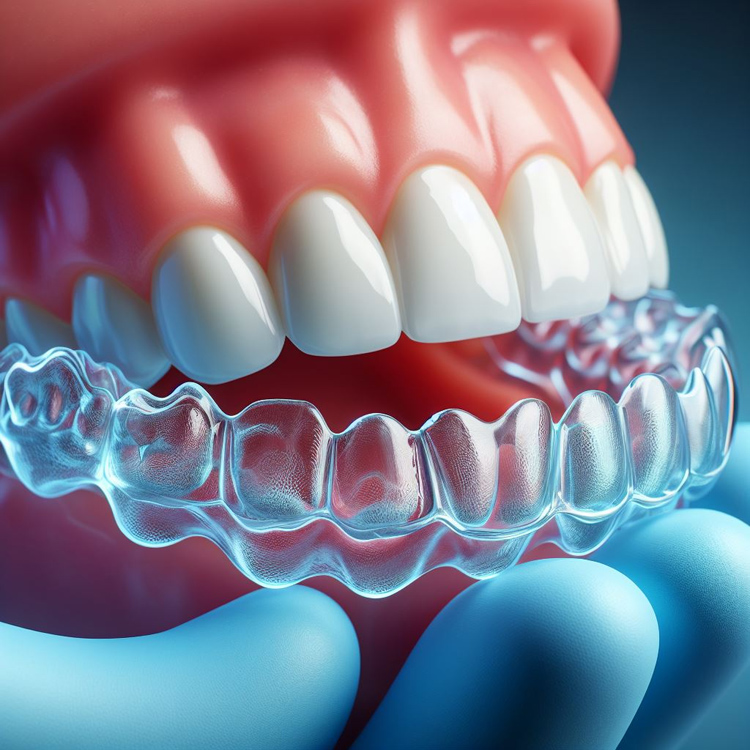
Clear Orthodontic Removable Aligners: Each aligner is custom fabricated from medical grade polyurethane using engineered composite attachments bonded to the enamel matrix. Incremental pressure patterns are built into each tray and are utilized to perform complex root torque movements.
Porcelain Veneers/Crowns: In cases involving mild degrees of flaring without skeletal implications, ultra thin lithium disilicate E.max porcelain veneers can be placed after minor reduction of enamel layer. This creates a new apparent angle for your upper front teeth and produces a perfectly straight smile line in just a few visits.
Orthognathic Corrective Jaw Surgery: If severe skeletal imbalances exist, an oral/maxillofacial surgeon surgically repositions either the maxilla or mandible. Rigid titanium plates are then employed to stabilize each respective bone and establish balance among facial features.
Costs for correcting flared upper front teeth depend on materials, severity of case and technologies available in Kerala India:
Metal Brackets: ₹35,000 – ₹55,000
Ceramic Brackets: ₹50,000 – ₹75,000
Clear Aligner Therapy (Basic-Premium Brands): ₹70,000 – ₹3,50,000
Porcelain Veneers per Tooth: ₹12,000 – ₹25,000
Orthognathic Corrective Jaw Surgery: ₹1,50,000 – ₹3,50,000 (Often Requires Hospital Stay)
Most costs for standard dental treatment options for cosmetic enhancements are paid for by patients individually. In contrast, extensive corrections that affect chewing/breathing functions may be eligible for partial payment via comprehensive private medical insurance plans or corporate medical allowance programs.
Multiple specialties work together in managing flared upper front teeth:
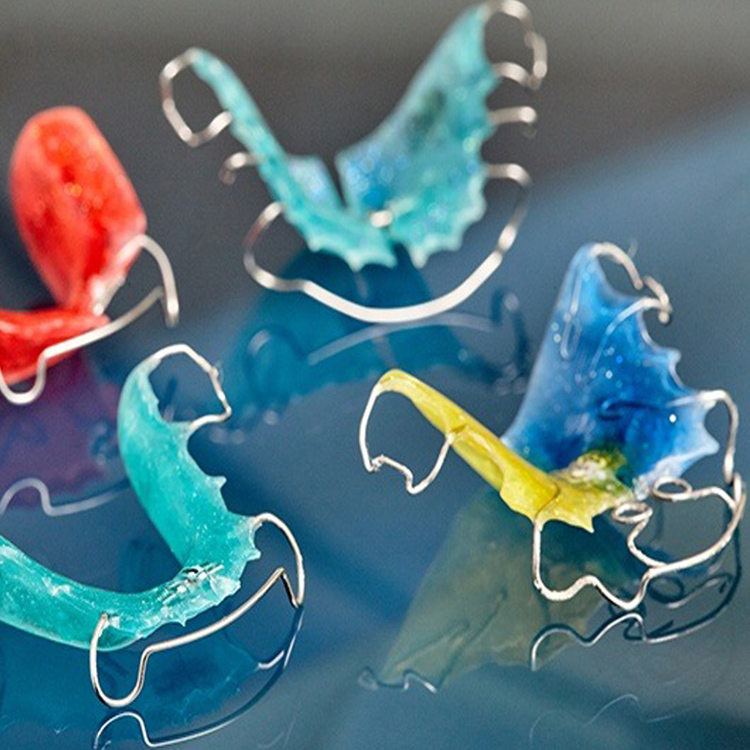
Orthodontists: Primary specialists involved in developing orthodontic forces systems and employing fixed appliances or removable orthodontics to safely move teeth through alveolar bone.
Oral/Maxillo-Facial Surgeons: Involved when there is need for Orthognathic jaw repositioning or when complex surgical extractions are needed.
Prosthodontist/Cosmetic Dentist: Consulted when structural correction involves altering/enlarging enamel matrix with crowns, bridges or porcelain veneers.
Periodontists: Required if patient has existing periodontal disease/bone loss prior to initiating any orthodontic treatments.
Routine/ Elective (Within a week/month): If there are structural flare-ups without pain, tissue bleeding, or advanced bone resorption.
Acute / Prompt (Within one-two weeks): Rapidly increasing gaps, progressive tooth mobility, painless ulceration where lower teeth strike palatal tissues.
Emergency / Immediate (within two-four hrs.): If a protruding front tooth suffers an acute impact or macro-trauma due to its exposed position, causing a fracture into the pulp chamber or total tooth avulsion.
Are there ways to move my front teeth back into place without using braces?
No. Moving teeth in a safe manner will require controlled, constant mechanical force which will allow the Osteoclast/Osteoblast cells to remove and build bone. Home remedies or "finger pressure" may cause damage to the pulp chamber of the tooth and lead to tooth loss.
Do I have to take out all my adult teeth to straighten them?
Only when space limits demand it. In mild cases of flaring, modern methods such as Interproximal Reduction (IPR) or expanding the dental arch can produce sufficient space without extractions. Premolar extractions (commonly the first premolars) are typically utilized in moderate to severe cases where significant physical space must be created to safely retract the protruding front segment and normalize overjet values.
What effect does mouth breathing have on how well aligned my front teeth are?
Mouth breathing causes the tongue to lie very low in the mouth rather than resting against the hard palate. Without the supportive influence of the tongue, the cheek muscles compress the upper jaw and narrow it. This results in the crowding and flaring of the front teeth.
When treating maxillary protrusion, early recognition is key. Not only does correcting this problem provide an aesthetically pleasing appearance but also provides a critical functional intervention to protect the anterior dentition from trauma and extend periodontal health. The ability to digitally work through high resolution lateral cephalometric analytics and clear aligner software enables us to accurately predict tooth movement while being mindful of the delicate cortical bone plates that exist around each tooth. To achieve long term stability, patients must engage in comprehensive retention protocols as well as address any underlying myo-functional or airway habits that may exist to prevent relapse.





.jpg)
.jpg)
.jpg)
.jpg)

.jpg)
.jpg)
.jpg)
.jpg)
.jpg)
.jpg)
.jpg)
.jpg)