
Food lodgment/food impaction refers to the wedging of soft or hard fibrous foods between two adjacent teeth. It occurs as an effect of losing close contacts between teeth either through tooth wear, or gum loss, and can lead to breakdown of the delicate inter-dental papilla. Once the papilla has broken down, the alveolar bone underneath will be exposed to local inflammatory processes and bacterial invasion. This leads to rapidly progressing periodontal destruction if left untreated.
Clinical Definition: Wedging of food between adjacent teeth due to gum breakdown or missing contact points between teeth.
Emergency Signs: Severe throbbing pain, facial or intraoral swelling, active suppurative discharge (pus), or fever.
Treatment Options: Intermittent cleaning of debris between teeth, restorative composites placed at the site of the lost contact point, replacing the damaged crown with one designed to fit closely against its neighboring crown, and/or periodontal flap surgery.
Painful Pressure: Patient experiences discomfort or pressure when chewing food.
Involuntary Tactile Behavior: The patient feels compelled to manually dislodge food caught between their teeth using the finger nails, tooth picks or the tongue.
Redness, Swelling and Pain upon Brushing: When brushing around the area of impacted food, patients may experience some redness, swelling and pain.
Bleeding & Halitosis: When food gets lodged between the teeth, the bacteria begin to break down the food and multiply. As the bacteria continue to multiply, they produce volatile sulfur compounds (vsc’s) resulting in bad breath. The vsc’s also cause gum irritation leading to spontaneous bleeding upon cleaning between the teeth.
Suppurative Drainage Through Gum Line: Continually draining pus from the gum line when applying gentle pressure.
Mobility of Adjacent Teeth: The patient observes noticeable loosening or shifting of adjacent teeth.
Facial Pain Radiating to Other Areas: Severe facial pain radiating from lower face to ears, temples or neck indicating possible deep abscess or pulpitis in adjacent teeth.
General Signs and Symptoms: Fever and swollen submandibular lymph nodes indicate systemic infection.
Loss of Tight Contact Point(s): Loss of tight contact points created by tooth movement due to orthodontic treatment, excessive tooth wear due to grinding/clenching habits etc.
Interproximal Cavitation: Formation of cavitation (decay) on the side surface of adjacent teeth that traps food fibers.
Overhanging Restoration Surfaces: Defects in restorations allowing trapped food fibers.
Opposing Tooth Plunger Cusps: Opposing tooth cusp shape creates piston action and pushes food into inter-proximal areas during chewing.
Regional Diet: Frequent consumption of fibrous meat, fibrous vegetables, shredded coconut and rough texture seafood commonly found in Kerala diet.
Pre-existing Periodontal Disease: Recession and bone loss previously caused by pre-existing periodontal disease.
Orthodontic Malalignment: Irregular spacing of misaligned or crooked teeth create odd shaped spaces.
Poor Maintenance of Proximal Spaces: Failure to maintain proximal spaces utilizing interdental brushes/floss.
Trauma: Chronic picking with tooth picks or safety pins that damages the interdental papilla causing further widening of interdental space.
Visual Examination: Look for black triangles or red, swollen gum edges in a mirror lit space.
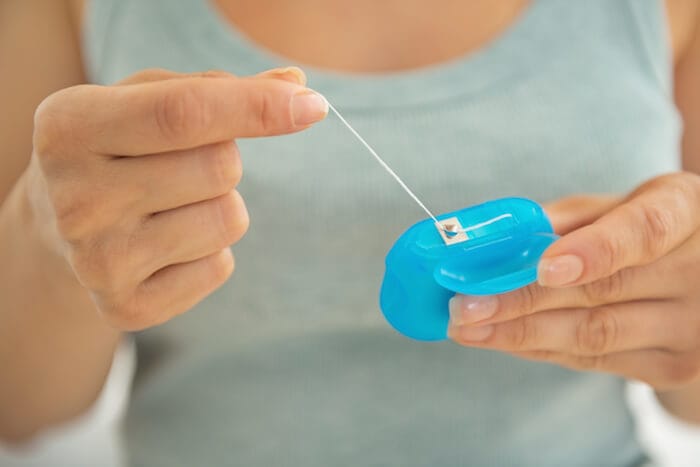
Tactile Floss Test: Run clean dental floss in a smooth motion through the space to determine if you feel resistance (a snap) when sliding the floss into the contact area. If there is no snapping sensation while flossing, then this may indicate that the contact point is either open or loose. If the floss breaks off, tears, or gets stuck in the space; then this can be indicative of damage to the structure of the tooth or gum in this area. The possible causes include decay under the contact point, an overhanging restoration margin, and/or excessive calculus build-up.
Odor Assay: Pass floss through space and test immediately for sour odors. Sour smells are indicative of long standing organic matter.
Warning: Do not put sharp metal objects, match sticks or wood splinters into your gum crevices because you will permanently damage your tissues and allow invasive bacteria to grow inside these new wounds.
Visual/Tactile Evaluation: Dentists use a calibrated probe to evaluate pocket depths and tightness of contact points.
Drag Test with Dental Floss: Measure amount of drag/friction experienced while sliding waxed floss through contact zone.
Radiography: Evaluate interproximal bone loss and presence of overhangs or hidden decay using bitewing/X-ray images or digital intra oral X-ray images.
Occlusal Force Determination: Analyze forces involved in biting to determine presence of plunger cusp or occlusal interference.
|
Severity Classification |
Clinical Features |
Common Consequences |
|
Mild (Superficial) |
• Trapping of food for brief periods. • Redness in surrounding gum tissue. • Intact bone levels. |
• Cleans up easily with dental floss. • No lasting harm to the tissue. |
|
Moderate (Mid-level) |
• Frequent food impaction. • Recession of interproximal papillae (formation of black triangles). • Early periodontal pocketing (4 mm). |
• Continued gum inflammation. • Local bleeding. • Initial development of interproximal caries. |
|
Severe (Advanced) |
• Continuous entrapment of food. • Deep pocketing (greater than 5 mm). • Bone loss. • Formation of pocket abscesses. |
• Increased mobility of adjacent teeth. • Structural bone loss. • Advanced (Stage III / Stage IV) Periodontitis. |
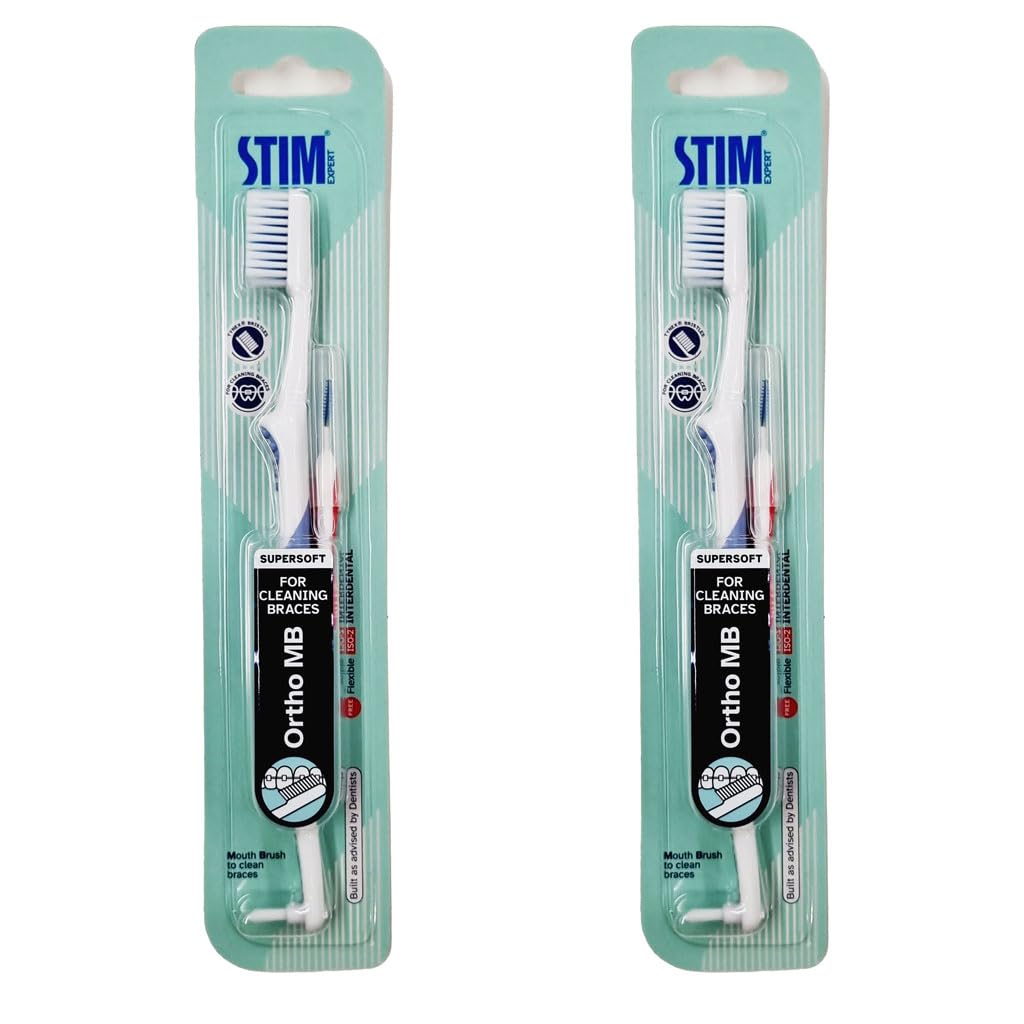
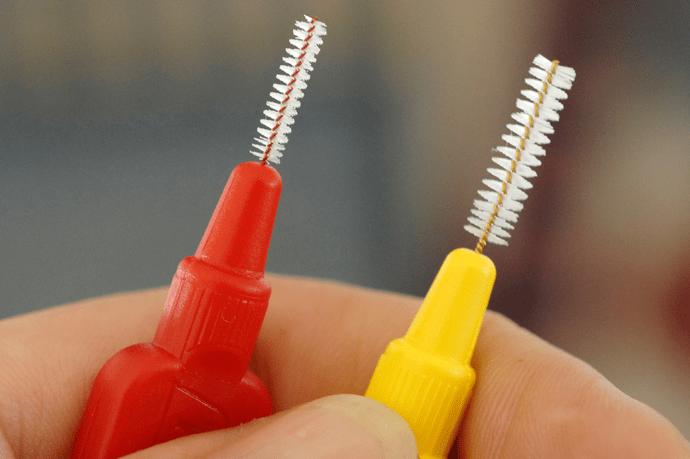
Hygiene Therapy: Educate patients about how best to clean between their teeth using specialized tools such as interdental brushes, water flossers and “super”-floss specific to each patient’s unique interdental space dimensions.
Composite Restorative Contouring: Creating a high density composite resin to create a new anatomically correct contact point between adjacent teeth.
Crowns and Bridges: Replace poorly fitting crowns with custom-fit ceramic/zirconia crowns which create a naturally correct anatomical contact relationship between adjacent teeth.
Enamoplasty: Shaping the opposing cusps so they do not push food into the interproximal space during chewing.
Surgical Reconstruction of Damaged Bone and Soft Tissue (regeneration surgery): Scaling/root debridement/bone grafting/flap surgery to reconstruct the damaged bone and provide normal tissue contour.
Treatment costs vary depending on how severely the patient is afflicted and type of materials used in treatments:
Professional Scaling & Interdental Cleaning: ₹800 – ₹2,000.
Interproximal Composite Restorations: ₹1,500 – ₹3,500 per tooth.
Custom Zirconia/PFM Crowns (to Re-Establish Contact): ₹4,500 – ₹15,000 per unit
Periodontal Flap Surgery & Bone Grafting: ₹8,000 – ₹25,000 per quadrant.
Most basic periodontal procedures and extraction services are covered, at least partially, under public healthcare programs provided to patients admitted into government or trust hospital systems; however, most private aesthetic crowns and all advanced regenerative surgical services are considered out-of-pocket expense.
General Dental Practitioner: Excellent for initial diagnostic evaluation, regular scaling and simple composite fillings.
Periodontist: Necessary when food entrapped has created large areas of gum recession or exposed bone loss, recurring abscesses, or requires flap surgery.
Prosthodontist: Needed for complicated crown replacements, complete mouth occlusal adjustments, or changes to bridges to correct open contacts.
Emergency (within 24 hours): Immediate action needed if food entrapping creates severe throbbing pain, visibly infected pus, or localized swelling around the face (indicative of an acute periodontal abscess).
Scheduled (1-2 weeks): Regularly occurring food trapping with no immediate discomfort but enough to allow early intervention prior to formation of interproximal decay or irreversible bone loss.
How can food always be getting stuck between the same two teeth each time I eat?
This usually means there is an open contact point on your teeth, an undiagnosed cavity on the side of one or both of these teeth or some other type of overhang which is allowing small amounts of food to pass under chewing pressure down into the space where it will continue to accumulate.
Can food lodging make a tooth move/shift?
Yes. Trapped food particles under chewing pressure causes local inflammation (periodontitis) which degrades the supporting structures including the periodontal ligament and alveolar bone. Over time this degradation will dissolve the bone support structure allowing the tooth to become unstable/movable.
Is it okay to use a toothpick if the food is lodged deep in my gums?
No. Toothpicks are typically made of wood and have a sharp edge, and therefore they can cut into the triangular gum tissue (interdental papilla) making the area larger and increasing the amount of space for additional food to lodge. Flexible interdental brushes and/or a water flosser should be used.
Patients often underestimate their food lodging problems as a minor problem than a progressive damage to tooth structure. If not treated, the constant pounding action of food in combination with bacteria creating acid, will break-down the soft tissues around the teeth and then work its way to the hard bone underneath. Clinical treatment today focuses on detecting this early using digital x-rays and restoring the lost tooth structure either through placement of composite resin in an area that had an opening (contact point) or utilizing a specific periodontal therapy. To maintain success over time for this type of dental issue, one has to stop causing trauma to the gums while eating and develop a consistent routine of cleaning between the teeth that are based upon the unique anatomy of the mouth.





.jpg)
.jpg)
.jpg)
.jpg)
.jpg)
.jpg)
.jpg)
.jpg)
.jpg)
.jpg)
.jpg)
.jpg)