 Treatment
Root canal treatment enjoys a 90-95 percent success rate. Occasionally, infection returns and the root canal fails. In these circumstances, you may need a procedure called endodontic re-treatment. Endodontic re-treatment involves reopening your tooth to clean, sanitize, and reshape the chamber and canals to save your tooth.
The re-root canal treatment is a dental procedure used to treat a tooth that has not stuck well the first time or has become reinfected. This process entails reopening the tooth, extracting the old filling material, cleaning and disinfecting the root canals, and resealing them to restore oral health. This procedure is an essential part of modern dentistry, and it allows a dentist to save a natural tooth rather than having to extract it and replace it with an implant or bridge, which is a much more invasive option.
If the tooth is still infected after a regular root canal, a re-root canal can be performed to treat infection of the tooth. This can occur for a variety of reasons, such as missed canals or complex root canal anatomy, failure to adequately seal the canals, new decay on the tooth being treated, or fracture of the dental restoration. Retreatment is primarily performed to remove infection, prevent further complications and restore function and structure to the tooth to help patients keep a healthy, natural smile.
Re-root canal is usually required for those patients who experience pain or swelling in a previously treated tooth which doesn't seem to subside, or recurrent gum boil or pus, discoloration of the treated tooth, or shows infection in X-ray. Anyone with broken crowns or fillings revealing the root canal also needs this treatment.
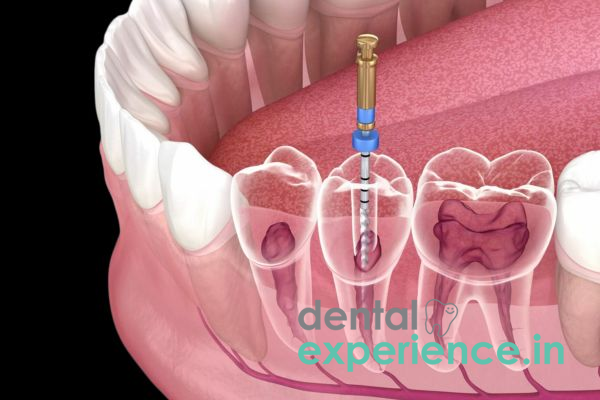
The most straightforward method is endodontic retreatment, in which the previously-filled root canal filling material is removed, the canals are re-instrumented to clean them thoroughly and the canals are re-filled. If this standard retreatment fails, a surgical re-root canal treatment, called an apicoectomy, can treat the issue by cutting out the infected root tip and surrounding tissue. Microscopic re-root canal treatment is an even more sophisticated treatment process in which dental microscopes with high magnifications are utilized to achieve excellent cleaning and disinfection of root canals.
It starts with an assessment and an X-ray to see how much the tooth it infected or how much previous treatment failed. Then, the dentist reopens the tooth to get rid of the old filling material and access the root canals. The canals are cleansed, and disinfected for bacteria removal, using advanced rotary instruments and irrigation solutions. The canals are then filled and sealed with a biocompatible material called gutta-percha, which prevents reinfection. Finally, a new crown or filling is added to strengthen and protect the tooth, allowing it to return to functionality while restoring its appearance as well.
The process of re-root canal has several benefits. It enables patients to keep their natural tooth and avoid extraction. Aside from eliminating infection, the procedure also relieves pain and discomfort and restores normal chewing function. Moreover, it helps to maintain the alignment of surrounding teeth, preventing shifting that can result from tooth loss. The treatment also preserves the structure of the tooth, which helps it maintain its natural appearance and health over the long term.
Re-root canal treatment is not as time-consuming as other forms of treatment like extraction and implants. It has also a short recovery time, since the natural tooth is left intact and no invading surgical procedure is required. Moreover, it maintains the natural bite and chewing function, limiting issues related to having missing teeth.
The duration of a successfully retreated root canal is conditional on multiple elements, including the standard of the retreatment performed, the kind of restoration applied, and the standard of overall dental cleanliness. Depending on how well you take care of it, a re-root canal can last 10-15 years or longer. To further reinforce the treated tooth, it is capped with a dental crown which prevents fractures and reinfection. Routine dental visits and proper oral care are vital to ensuring that you retain the results of the procedure.
The time for doing re-root canal treatment depends on how difficult the case is. The procedure is typically performed in one to two visits, with each session lasting around 60 minutes. Cases involving multiple canals, a large amount of infection, or additional procedures such as crown replacement may take several appointments.
Generally, the cost of retreatment is ₹5,000 to ₹12,000. In case of further procedures required like apicoectomy or a crown replacement, it can go as high as ₹12,000 – ₹25,000. Although this treatment is costlier than a standard root canal, it is cheaper and more conservative than dental implants.
This procedure is generally safe, but re-root canal treatment poses some risks. Fractured teeth can result due to repeated drilling, and in the worst case, if the bacteria aren’t fully eliminated, there could be a persistent infection. Weak root structures may also be at risk of canal perforation, and poor sealing of restorations results in reinfection.
Although beneficial, re-root canal treatment also has disadvantages. It’s pricier than an initial root canal, and the process does weaken the tooth a bit over time. And in some cases, they won't be entirely successful, needing another procedure like an apicoectomy or extraction. Yet, with good care, most patients have a long-term successful outcome.
When root canal retreatment is not possible, options include extraction followed by restoration using a dental implant or bridge to replace the missing tooth. Another option is an apicoectomy, a simple surgical procedure in which the infected root tip is removed instead of re-cleaning the entire canal. However, root canal retreatment is still the least invasive and most conservation approach.
Avoid hard or sticky foods for a few days, and practice good oral hygiene by brushing and flossing. In addition to improving oral hygiene and discomfort management habits, the doctor would recommend using an antiseptic mouthwash to oath the oral cavity and reduce bacterial growth, as well as scheduling follow-up visits to the dentist to monitor healing. A temporary crown can sometimes be set for healing and if a permanent one is necessary, it should be placed in time to heal the tooth and prevent further reinfections.








.jpg)
.jpg)
.jpg)
.jpg)
.jpg)
.jpg)
.jpg)
.jpg)
.jpg)
.jpg)
.jpg)
.jpg)