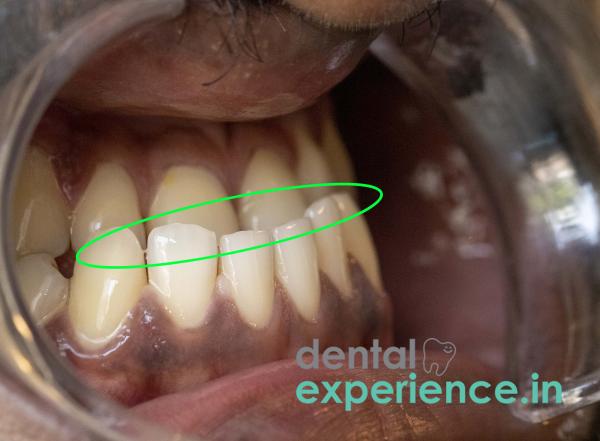
A cross-bite is a complex type of misalignment (malocclusion) of the upper and lower teeth. One or more upper teeth will be positioned inside the lower teeth. Normally, the upper dental arch is shaped like a lid over a box. It sits slightly above the lower dental arch. This helps to protect the soft tissues of the mouth. Also, it helps to evenly distribute chewing forces throughout both jaws. A cross-bite inverts this normal relationship of the upper and lower jaw.
Definition: Cross bites represent an inversion of the dental arch relationships where lower teeth are outside of upper teeth overall or in segments.
Anterior Cross Bite vs. Posterior Cross Bite: Anterior crossbites affect smile aesthetics and speech functions, while unilateral posterior crossbites alter chewing efficiency and cause a functional jaw shift, leading to visible facial asymmetry.
Warning Signs: Facial asymmetry, marked local wear of enamel in certain locations, chronic jaw clicks or recurring headache symptoms.
Treatment Options: Orthopedic palatal expansion, orthodontics, orthognathic surgery, or restorative crowns.
Recovery Time Frame: Treatment can take anywhere from six months to 24 months depending upon if the correction is solely dental related or includes a skeletal component.
As people navigate having a cross bite they develop many visual and tactile changes in addition to physical discomfort.
Their smile is visually distorted, and the midlines of the upper and lower front teeth no longer match when biting down. The patient uses their tongue to feel a jagged surface during the initial exploration of the dental arches since the displaced teeth create an irregular surface. During mastication (chewing), the patient experiences an imbalance of forces and therefore food does not move symmetrically to both sides of the mouth. Therefore, the patient chews food primarily on one side of the mouth. Unilateral chewing results in localized muscle fatigue/soreness of the facial muscles after a long day. Additionally, because of the continuous friction between misplaced teeth and soft tissues, Patients with a cross bite commonly exhibit chronic cheek biting and recurrent aphthous ulcers (canker sores) in the area of the buccal mucosa (the inner lining of the cheeks). Patients with a cross bite can eventually develop changes in their speech pattern including mild lisps and whistles during sibilants (words that contain "s" or "z").
Although many cross bites are treated electively, some clinical indicators necessitate urgent care to avoid future irreparable tissue damage. Two main risk indicators for urgency include progressive enamel abfraction (the formation of micro fractures in the enamel layer of the tooth below the gum line due to abnormal flexural stresses created by aberrant masticatory forces) and localized rapid progression of periodontal recessions. Enamel abfraction indicates that the cross bite is continuously wearing away tooth structure protecting the dentine beneath.
Localized rapid recession indicates that the traumatizing occlusal forces exerted by a single displaced upper tooth against its displaced lower tooth are creating destruction of alveolar bone support beneath its gingival attachment. If you observe a notch being formed at the base of your teeth or experience acute, sharp sensitivity to warm/cold beverages/drinks, your cross bite is currently stripping away your protective tooth structure and exposing dentine. Another indicator of urgent need is evidence of chronic morning headaches, a habituated locking of your jaw, or a gross audible cracking/popping noise in your TMJ indicating pathological remodeling of your joint cartilage.
The causes of a cross bite involve combinations of genetic predispositions and behaviors exhibited during early childhood.
Genetic predisposition: Hereditary jaw anatomy
A primary cause of skeletal crossbites is hereditary jaw anatomy, where a child inherits a smaller-than-average upper jaw from one parent and a larger-than-average lower jaw from another. However, localized dental crossbites in children are more frequently caused by developmental and behavioral factors.
Behavioral patterns: Prolonged non nutritive sucking behaviors.
Extended sucking habits past 36 months (three years old) including extended thumb sucking, pacifier use etc., consistently forces the tongue downward while increasing inward lateral pressure from the cheek muscles. This combination of altered muscle forces collapses and narrows the upper dental arch.
Early abnormal tooth eruptions: If a primary (baby) tooth falls prematurely due to caries or if it remains in place excessively beyond its expected eruption date, it distorts its corresponding permanent successor's eruption pathway creating a non-ideal angulation.
Chronic mouth breathing: Results from elongated tonsils, adenoid enlargement, or a deviated nasal septum displacing the tongue onto the floor of the mouth rather than resting on top of it. This eliminates the internal support provided by the tongue allowing the cheeks to push on the collapsed upper jaw providing internal pressure to collapse inward.
There are several potential biological problems/disorders/milestones that put individuals at greater risk to develop or worsen existing cross bites:
|
Risk Factor |
Impact on Bite Relationship |
|
Pediatric mouth breathing |
Decreases ability for tongue to provide internal lateral support for widening upper jaw naturally. |
|
Untreated early childhood caries |
Triggers premature tooth loss causing adjacent teeth to drift and close off available space for incoming permanent teeth. |
|
Cleft Lip/Palate |
Restricts forward/outward growth of upper jaw due to scar tissue from early surgical repair |
|
Adult Tooth Loss |
Adjacent molars drift into void left by missing posterior teeth altering geometric relationship of bite. |
|
Rheumatoid Arthritis |
Degrades TMJ condylar cartilage and bone, causing a loss of vertical jaw height, progressive bite shifts, or structural mandibular deviation. |
At home you can safely perform a preliminary visual inspection of your bite with good lighting using a well lit mirror. However, please do not use any instruments/hard materials to test or probe your teeth during this self-assessment.
Relax your jaw muscles: Swallow completely and relax all of your jaw muscles slowly bring your back teeth together and stop once they lightly touch. Do not force your jaw forward or sideward to make the teeth fit comfortably let them naturally meet at rest.
Visual inspection front zone/anterior: Smiling wide enough to show all of your teeth and gums visually inspect your front upper teeth and determine if any of them lie entirely within your lower front teeth.
Visual inspection rear zone/posterior: Lean your head backward slightly and visualize your side/rear teeth. Compare if the upper molars’ cusps lie interior to those cusps of your lower molars.
Check Midline alignment: Compare vertically aligned lines between your two front upper central incisors and compare vertically aligned lines between your two lower central incisors. A deviation from perfect alignment often denotes functional cross-bite where you must displace your jaw laterally to establish a comfortable rest position.
A definitive diagnosis for a cross-bite involves a comprehensive clinical evaluation performed by a dental provider. The diagnostic process starts with a visual/tactile exam with a dental mirror/explorer assessing each tooth’s mobility and looking for signs of wear facets on each tooth’s chewing surfaces and charting areas of gingival recession created by traumatic occlusions.
Radiographs are required to differentiate between dental & skeletal cross bites
To distinguish between a dental & skeletal cross-bite, complete radiographic surveys are necessary. A panoramic X-ray offers an overview picture of all upper/lower jaws showing root positions and impactions. A lateral cephalometric X-ray shows very accurately measured angular measurements relating to the cranial base/maxilla/mandible establishing if there is a bone issue. Digital intraoral scans create accurate 3-dimensional models of your teeth and allow practitioners to virtually simulate how your bite works on-screen and evaluate movement patterns and structural shifts.
Depending upon levels of severity, crossbites go through sequential stages requiring increasing levels of intervention:
Level mild - single-tooth dental cross bite: Only 1 or 2 teeth are involved in the misalignment. These misalignments generally exist only in an anterior incisor(s) or pre-molar(s). The jawbones are fully proportioned and symmetrical. Muscle stress associated with this level is minor. Correction can be accomplished via localized appliances applied to correct individual orthodontic problems.
Middle level – segmental functional cross bite: All of one segment of your teeth (anterior/posterior) are inverted in relation to their opposing counterparts. While closing your mouth, you cannot get your teeth to meet evenly thereby causing you to slide your lower jaw pathologically to one side to achieve comfortably chewable surfaces. This creates visible facial asymmetry as well as early signs indicative of TMJ dysfunction i.e., clicking/joint sounds.
High level - generalized skeletal cross bite: This level exists when significant differences exist between upper & lower jawbone sizes. Either there is deep constriction of the upper arch causing bilateral cross biting across almost all posterior teeth or significant under-development (growth restriction) of the upper arch leading to a generalized skeletal under-bite where nearly all lower arch lies outside the upper arch. This level represents clinically evident facial asymmetry; speech difficulties; chronic TMJ pain; poor chewing ability; etc.
Crossbite correction involves either tooth movement alone, or combined tooth movement and jaw width increase, depending upon the patient’s age and severity of malocclusion.
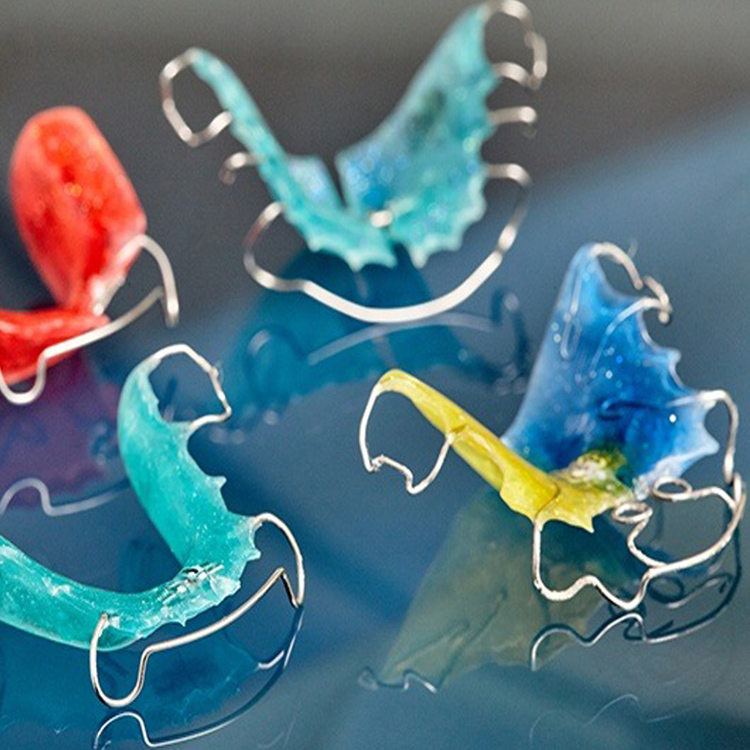
Orthodontic Expansion (Palatal Expanders): Children and adolescents with unfused maxillae can be treated with Rapid Palatal Expanders (RPE) which is the gold standard for posterior crossbites. RPE appliances consist of a metal spring anchored to the upper molars and include a central screw. The screw is turned gradually to apply gentle, continuous pressure to each half of the maxilla. This widens the palate by opening the midpalatal suture. Afterward, new bone forms across the gap.
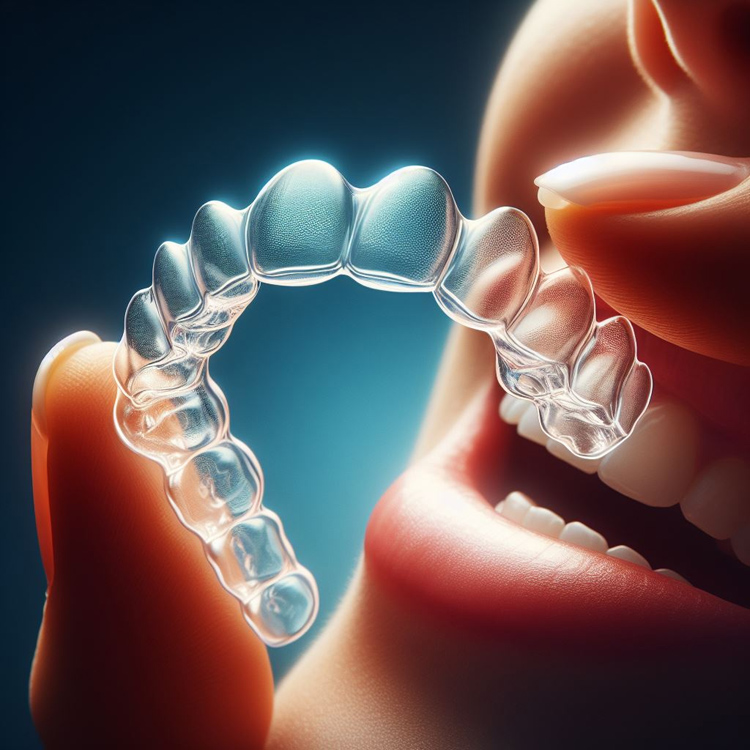
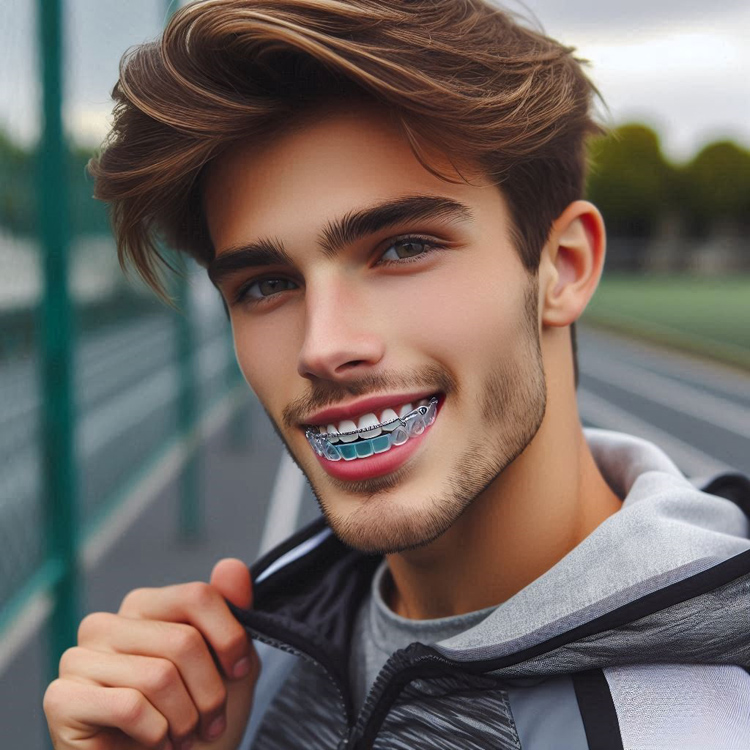
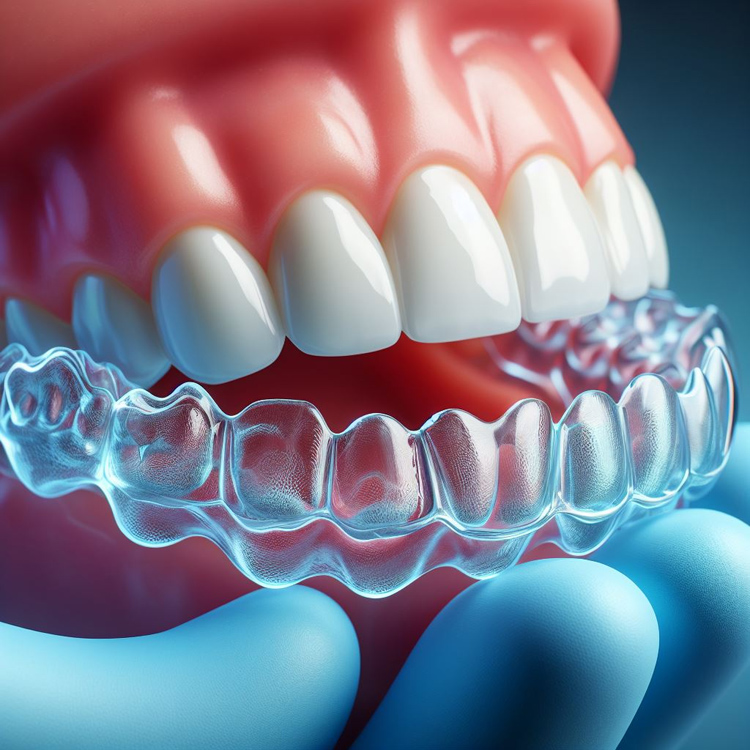
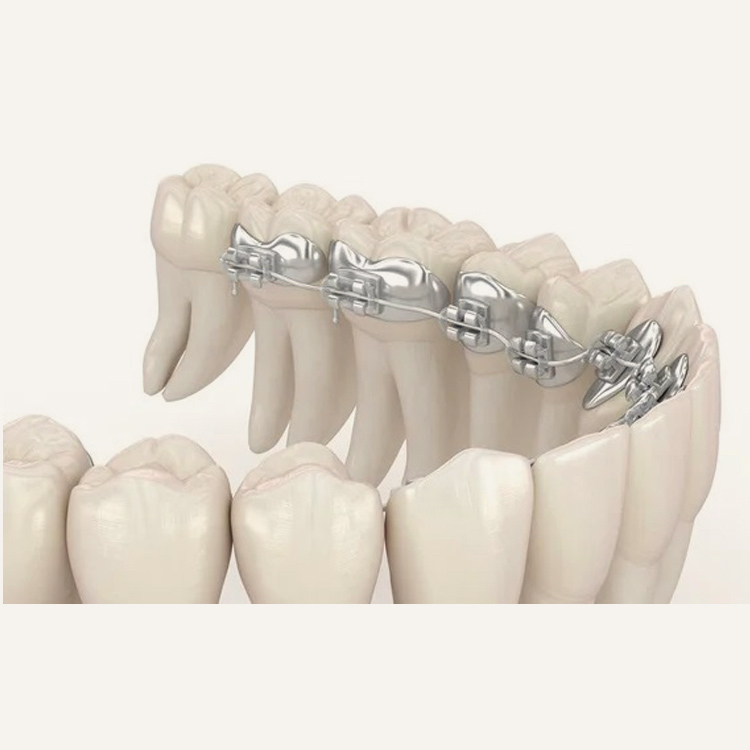
Comprehensive Orthodontics (Brackets and Aligners): Adults with moderate skeletal crossbites, who do not need expansion, or children with purely dental crossbites can be treated with traditional fixed orthodontic brackets. Intermaxillary elastics (elastics used between the upper and lower arches) along with specially constructed sequence of wires provide constant direction forces to tip the inverted teeth outward into proper occlusion. High-end clear aligners can also correct mild to moderately severe crossbites. These aligners are made from plastic with built-in ridges and attachments that are bonded to the teeth.
Surgical Intervention (Orthognathic Surgery): Severe skeletal crossbites in adults whose growth is completed cannot be expanded using traditional braces alone. To widen the bone, practitioners utilize Miniscrew-Assisted Rapid Palatal Expansion (MARPE) as a minimally invasive option anchored by temporary implants, or progress to surgical options like Surgically Assisted Rapid Palatal Expansion (SARPE) or a Le Fort I osteotomy. Oral and maxillofacial surgeons cut the upper jaw to allow for expansion or reposition the entire upper jaw forward and outward. The upper jaw is then secured using titanium plates and screws.
Costs associated with crossbite correction vary significantly based on the degree of malocclusion, type of material chosen and biological age of the patient. The costs listed below reflect typical average cost ranges for treatments provided in Kerala. Most crossbite correction procedures are funded out of pocket or through specialty dental insurance add-on plans.
|
Treatment Modality |
Average Cost Range |
Materials/Clinical Factors |
|
Palatal Expander (RPE) |
₹15,000 – ₹35,000 |
Stainless Steel (custom-made), primarily for children who have not reached full skeletal maturity. |
|
Metal Brackets |
₹35,000 – ₹60,000 |
Reliable, uses stainless steel bracket materials. |
|
Aesthetic/ Ceramic Brackets |
₹55,000 – ₹85,000 |
Polycrystalline Alumina Bracket Material; reduces visibility of bracket system. |
|
Clear Aligners |
₹80,000 – ₹2,50,000 |
Smart-track polymers, price per stage of alignment increases as number of stages increases. |
|
Orthognathic Jaw Surgery |
₹1,50,000 – ₹3,50,000 |
Includes hospitalization and general anesthesia, includes costs for titanium plate/screw fixation and oral/maxillofacial surgeon services. |
To successfully treat a crossbite most patients will need to see multiple specialists.
Orthodontist:
• Primary Specialist for Crossbite Correction
• Exclusively trained in Dental Orthopedics and Maxillo-Facial Alignment
• Designs Expanders and/or Brackets/Aligners necessary to direct bite into its correct position
• Responsible for guiding the development of a comprehensive treatment plan for crossbite correction
Oral and Maxillofacial Surgeon:
• Provides orthognathic surgery for adult patients with severe skeletal differences requiring actual physical realignment of jaw bones
• Necessary for surgical procedures including SARPE or Le Fort I osteotomies
Periodontist:
• Needed if there is significant gum recession/bone loss due to a constrictive bite
• Performs Soft Tissue Grafts after the trauma of the bite has been removed allowing for the lost gum line to be rebuilt.
General Prosthodontist/Dentist:
• Needed when severe wear has destroyed the biting surface(s) of the teeth
• Fabricates crowns and onlays to restore the shape of teeth post orthodontic movement
The urgency to begin crossbite treatment depends largely on the patient’s biological age.
Pediatric Patients (Age 6 – 10):
High Urgency (within months).
This is generally considered the optimal timeframe for crossbite correction. Due to open facial bones, young pediatric patients can undergo crossbite correction quickly and non-surgically using basic expanders. Delaying treatment will turn what would have been a relatively easy orthopedic problem into a potentially very complicated surgery later in life.
Teenagers and Adults:
Moderate Urgency (elective scheduling).
Adults’ condition is stable however it continues to destroy teeth. Scheduling treatment in the near future will stop further destruction of enamel from chewing abrasion, gum recession and TMJ deterioration. If you develop sudden jaw locking or acute joint pain, please expedite your assessment to avoid permanent joint disc injury.
Will my child’s crossbite correct itself as he/she grows?
No. A crossbite does NOT self-correct. Like many minor dental misalignments present at birth that eventually self-resolve because of normal growth in the size of the jaw; a crossbite represents a structural "trap". Each time a permanent tooth erupts into the wrong space, it locks the bite into its incorrect position. As the child continues to grow, his/her muscles and bones adjust to the abnormality and therefore worsen the crossbite making it increasingly difficult to treat as an adult without extensive work.
Are premium clear aligner systems sufficient for correcting posterior crossbites?
Yes. Modern day premium clear aligner systems are highly successful in treating mild to moderate dental posterior crossbites. Premium clear aligner systems contain specific pressure points designed to tip misplaced molars back into their proper positioning. However, for severe skeletal crossbites in adults where the underlying bone is narrow, premium clear aligner systems alone are unable to widen the skeletal structure. Adult patients with such a presentation require clear aligner systems as part of a multi-treatment approach to fix their skeletal malocclusion.
Do insurance plans cover costs associated with correcting a crossbite?
Typically no. Standard base Health Insurance Policies in India view orthodontic alignment as an elective cosmetic procedure and exclude coverage. However, if your crossbite is skeletal and requires corrective surgery (e.g., to address an inability to chew food properly or sleep apnea) the surgical/hospitalization portion may be covered under your policy. Please consult with your provider to determine whether your policy covers any aspect of maxillofacial anomaly treatment.
Clinically speaking, a cross-bite is much more than an aesthetic concern, it is a progressive mechanical breakdown of the masticatory system. Since the upper/lower dental arches are positioned in reverse relation to each other all chews exert destructive lateral forces against the teeth instead of safe vertical forces directed down their length.
If a pediatric patient receives appropriate interceptive treatment around age seven we can utilize natural growth to direct their developing jaw bones into alignment with relative ease. Conversely, adult patients will require more detail-oriented care to correct a cross-bite, however correction is essential to protect their teeth from premature loss, cessation of gum recession and relief from chronic stress placed on their temporomandibular joints.


.jpg)
.jpg)
.jpg)
.jpg)
.jpg)
.jpg)
.jpg)
.jpg)
.jpg)
.jpg)
.jpg)
.jpg)