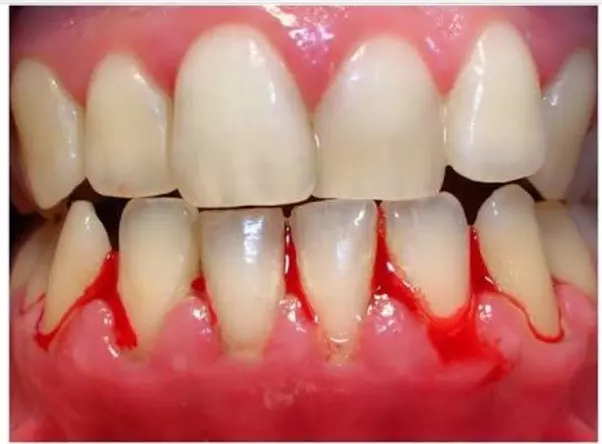
Bleeding gums (gingival hemorrhage) are the first sign of localized inflammation in the periodontium (supportive structures of the teeth), which includes the gingiva (gums), periodontal ligament, and alveolar bone. Localized infection of the gingival sulcus (shallow groove between the tooth and gum) results in a bacterial-induced immune response. The resulting dilation of small capillaries causes the very vascularized tissue to become hyperemic (red and swollen) and micro-ulcerations in the delicate lining of the sulcus makes it more prone to injury. If left untreated, mild gingivitis will eventually progress into periodontitis. Periodontitis leads to irreversible destruction of alveolar bone and eventual compromise of tooth support.
Clinical Definition: Clinical definition is localized inflammation/fragility of the capillary bed within the gingival tissues due to accumulation of bacterial biofilm or systemic stimuli.
Urgent Indications: Spontaneous bleeding; purulent discharge (pus); persistent bad breath (halitosis); mobility of teeth; progressive recession of the gum line.
Treatment Options: Ultrasonic scaling by a dentist, root planing, laser-assisted therapy for periodontics, antibiotic therapy for specific pathogens.
Visual Findings: Gingiva is red, replacing normal pink/coral coloration, and there is visible recession of the gum line.
Sensory Findings: Pain during mastication (eating) or brushing, localized heat sensation, spongy/tender to touch when evaluating the texture of the gum line.
Physical Findings: Bleeding while brushing, blood-stained saliva while eating firm/local foods such as kappa (tapioca), unpeeled guavas, metallic taste in the mouth.
If spontaneous bleeding occurs without trauma or direct contact with the area, seek medical attention immediately. Some key clinical indicators of severe illness include:
Nocturnal Bleeding: Pooling of blood on pillowcase while sleeping.
Suppuration: Purulent discharge from gingival margins upon gentle pressure from a gloved finger.
Pathologic Migration: Drifting apart of adjacent teeth, loosening of teeth during regular mastication.
Systemic Signs: Fever >101.5° F, swelling of submandibular lymph nodes, ulcerative lesions along interdental papilla (between teeth).
Biofilm Microbial Accumulation: Poorly cleaned interdental areas result in formation of tartar/calculus that continues to irritate the surrounding soft tissue.
Mechanical Injury: Use of aggressive brush strokes with a hard-bristled toothbrush, improper use of a toothpick, common in some regional dietary practices.
Chemical/Substance Irritation: Prolonged exposure to betel quid (paan) or smokeless tobacco products, resulting in local chemical burn/inflammation.
Restorative Defects: Excessive overhangs on crowns/dentures, allowing for entrapment of food debris along sulcus.
Nutritional Variance: High intake of processed carbohydrates/starches without sufficient Vitamin C (ascorbic acid) diminishes collagen production in the gum matrix structure.
Hormonal Changes: Hormonal changes in pregnancy ("Pregnancy Gingivitis") increases vascular permeability in the gums.
Systemic Illnesses: Untreated Type II Diabetes Mellitus prevalent in Kerala severely impairs vascular repair/healing and hastens breakdown of periodontal tissues.
Pharmacologic Factors: Certain medications cause tissue reactions/alteration in clotting time, i.e., calcium channel blocker, anticonvulsant, antiplatelet drugs (aspirin/warfarin).
Thoroughly wash hands with antiseptic soap before examining/touching oral tissue. Never probe the gum line using a sharp object/fingernail.
Visual Inspection: Stand directly under a bright light source. Gently retract both upper and lower lip tissue to visually assess for signs of discoloration/swellings.
Evaluation of Margins & Symptoms: Carefully examine each interdental papilla (the triangular-shaped point between each tooth) for sharp/knife-edge appearance vs. round/blunt swelling. Take note of whether bleeding occurs only during brushing/flossing or happens spontaneously, and track any persistent metallic taste or bite changes.
Probing: Utilizing a WHO or UNC-15 probe measures the depth of the sulcus. Measurements greater than 3 mm indicate an active disease process.
Bleeding on Probing (BOP): Measure percentage of sites that bleed within 30 seconds of probing using standardized clinical metrics.
Digital Radiographs: Obtain intraoral periapical (IOPA) radiographs or panoramic X-Ray (OPG) images to visualize interproximal bone loss.
|
Stage |
Sulcus Depth |
Bone Involvement |
Typical Clinical Presentation |
|
Gingivitis (Mild) |
1–3 mm |
None |
Bleeding during brushing; fully reversible tissue swelling. |
|
Moderate Periodontitis |
4–5 mm (Periodontal Pocket) |
Early Alveolar Loss (15–30%) |
Persistent bleeding, localized recession, early halitosis. |
|
Severe Periodontitis |
≥6 mm (Deep Periodontal Pocket) |
Advanced Loss (>30%) |
Spontaneous bleeding, tooth mobility, suppuration, root exposure. |
Ultrasonic Scaling & Polishing - The use of high frequency ultrasonic vibrations will break down subgingival bacterial biofilms and safely remove calcified deposit buildup.
Scaling & Root Planing (SRP): Local anesthesia will be administered to allow for the removal of all hard and soft plaque material from the root surface using mechanically forced instrumentation. This allows for the reattachment of periodontal fibers.
Laser Assisted Periodontal Therapy (LANAP): Diode or Nd:YAG lasers will selectively kill bacteria associated with the diseased sulcular epithelium, while leaving the healthy connective tissue intact.
Antimicrobial Placement: Subgingival placement of sustained release chlorhexidine chips or doxycycline gel placed directly into the deepest pocket areas.
Ultrasonic Full Mouth Cleaning: ₹1,200 to ₹2,500 per treatment.
Deep Scaling & Root Planing (per quadrant): ₹1,500 to ₹3,500.
Laser Assisted Periodontal Therapy: ₹8,000 to ₹18,000 for full mouth therapy.
Surgical Flap Procedures (when necessary): ₹4,000 to ₹8,000 per quadrant.
Insurance/Financial Structure: Most standard dental cleanings are considered out-of-pocket expenses. However, when patients have severe periodontal problems due to systemic conditions, these procedures could possibly qualify under comprehensive private health insurance coverage plans or state sponsored programs, if done in an accredited hospital setting.
General Dentist: For general routine prevention visits, initial gingivitis diagnosis and minor ultrasonic scaling.
Periodontist: Mandatory for all periodontal treatments beyond 4mm pocket depth, extensive alveolar bone loss, laser surgeries, soft tissue grafts and/or regenerative procedures.
Endodontist/Prosthodontist: Needed when there is both endo-perio lesion (coexisting periodontal disease and root canal pathology) and then need a full mouth rehabilitation with crowns and bridges.
Emergency (within 24 Hours): Need immediate appointment with the dentist there is uncontrolled bleeding, acute throbbing pain, facial swelling, and high grade fever.
Urgent (within 48-72 hours): Need to be seen promptly if there is spontaneous or nocturnal bleeding without trauma, pus exuding from the gums, loose teeth, or painful ulcers.
Elective (within 7-14 days): Routine bleeding occurring only during brushing/flossing without pain/mobility.
Why do my gums bleed even though I am brushing gently?
Bleeding occurs due to inflammation of the tissues caused by small amounts of bacteria in your plaque, not because you brushed hard. If your gums are swollen from chronic inflammation then any gentle touch by your soft bristle toothbrush causes irritation to already sensitive capillaries.
Are home remedies like salt water rinses effective cures for bleeding gums permanently?
Salt water rinses can help reduce inflammation and decrease the amount of bacteria in your mouth temporarily. They however cannot remove the hardened tartar below your gumline which is causing the bleeding. To completely eliminate this problem, professional dental cleaning/scaling must take place.
Do gum bleeds commonly happen in pregnant women?
Yes. Hormonal changes during pregnancy makes their gums more sensitive to plaque. Thus, many pregnant women develop "pregnancy gingivitis". It is highly recommended that all pregnant women get a professional cleaning during their second trimester.
Bleeding gums are frequently minimized in the local clinic environment. Bleeding gums are considered by many clinicians to simply be a nuisance or minor inconvenience. However, bleeding gums represent an active open wound in the oral cavity. The chronic inflammatory exudate produced by the gingival crevice represents an easy route for oral pathogens to enter systemic circulation. Therefore, early interventions utilizing contemporary ultrasonic debridements and aggressive interdental hygiene routines provide the best opportunity to maintain natural dentition throughout one's lifetime.







.jpg)
.jpg)
.jpg)
.jpg)
.jpg)
.jpg)
.jpg)
.jpg)
.jpg)
.jpg)
.jpg)
.jpg)