loader

Complete Denture

Home› Treatments› Complete Denture
Complete Denture Treatment
Watch Video
Reviewed by Dr. Seby Varghese

Fast Facts

99% say it's "Worth It"
15000/- to 150000/-
Longevity: Complete dentures can last anywhere between 5 to 10 years with good care.
Duration: On average between 4 to 6 weeks to complete.

Complete dentures are full-arch prosthetic devices used to replace all missing teeth in the upper or lower jaw. Designed for comfort and a natural appearance, they help restore your ability to speak, chew, and smile confidently. Ideal for patients who have lost all their teeth, complete dentures are custom-made to ensure the best fit and functionality.

Problems Treated with Complete Denture

Questions & Answers

QHow do you care for dentures?
QWhat is a full mouth rehabilitation? Can it be done for a 70 year old?
QIs it true dentures shorten your life span? What is an alternative for dentures?
QWill a Rs.12,000 denture set function the same as a premium more expensive denture set? What are the drawbacks of having cheaper dentures?
QCan you wear dentures 24x7, even while sleeping?
QWhat would be the price for a complete set of very natural looking premium dentures in Kochi, Kerala?
Ask Your Question
Share this page
What is Complete Denture?

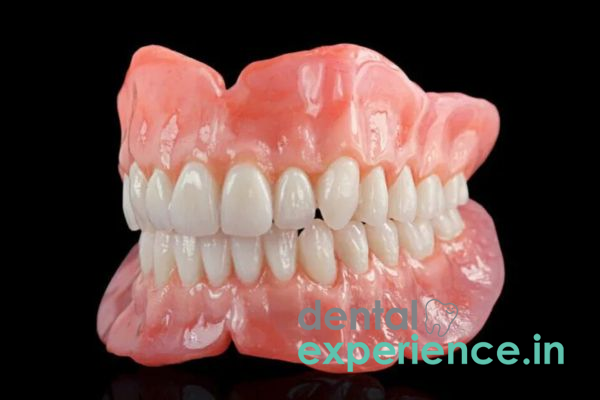
A complete denture (sometimes referred to as a full denture) is a removable prosthetic device designed to replace all of the missing teeth in either the upper or lower arch (or both). Complete dentures not only restore oral function (i.e. eating) but also facial aesthetics and speech, which are often compromised with complete tooth loss.

Why is it needed?

Complete dentures are needed to restore the function of chewing, speaking, and smiling (changing the aesthetics of the smile) for individuals who have been edentulous (without teeth) due to age, periodontal disease, trauma, severe decay of teeth. Beyond function - complete dentures contribute to facial form by supporting the lips and cheeks and preventing the sunken look that is often associated with complete tooth loss. Complete dentures also provide psychological and emotional comfort for many denture wearers by giving them confidence and improving their quality of life.

Who needs it?

Complete dentures would be ideal for:

  • Adults and older adults who are edentulous in one or both arches.
  • Individuals that cannot afford to have implant supported/fixed bridges or are medically unfit for that kind of treatment.
  • Patients with severe periodontal disease where teeth are non-restorable.
  • Individuals who want teeth replacement with a non-invasive and reversible treatment option.

What are the types?

Complete dentures can be classified into several categories based upon their material, design, and techniques used to create them:

  • Conventional Complete Dentures – Constructed after all extraction sites have healed completely.
  • Immediate Dentures – Constructed and inserted after the extractions, meaning they will serve the patient as temporary dentures.
  • Implant-Supported Complete Dentures – Utilizing dental implants that improve the retention and stability of the prosthesis.
  • Custom Dentures – Designed according to the specific anatomy of the individual's mouth, and using quality materials.
  • Overdentures – The denture that rests upon the roots of the remaining natural teeth, or that rests upon an implant, improving function.

The type of complete denture will usually be selected based upon the clinical situation, treatment plan preferences of the patient, and the budget of the patient.

How is it done?

The steps that are involved in providing complete dentures typically consists of several clinical steps and some laboratory steps:

  • Initial visit – Many clinicians will perform their oral examination including X-rays, and discuss the treatment options.
  • Pre-prosthetic treatment – All required extractions will be performed followed by a period of time where the tissues are healing and then oral conditioning will occur.
  • Primary and final impressions – Impressions of the mouth must be taken to create an accurate model.
  • Jaw relation records – Establishes the way that the patient bites together and also the vertical dimension of occlusion.
  • Try-in of denture set-up – This is a wax try-in where the patient is given an appliance to try for esthetics, function and fit.
  • Final delivery of denture – The completed denture is delivered to the patient and adjustments made.
  • Follow-up appointment(s) – The patient may require revisits for comfort adjustments and until their tissues have adapted to the appliance.

Currently, many clinics are utilizing digital workflows and using CAD/CAM technology to fabricate dentures as this is often quicker and more precise.

What are the benefits?

With complete dentures there are numerous functional and aesthetic benefits:

  • Bring back chewing and digestive efficiency.
  • Restore clarity of speech.
  • Re-create facial aesthetics and smile.
  • Improve self-esteem, and social interactions with people.
  • Cost-effective solution for complete tooth loss.

With proper maintenance, a complete denture allows the patient to live a normal and busy life, especially among the elderly.

Why is it better than the alternatives?

Here are some benefits of complete dentures over the alternatives of full-arch implants or bridges:

  • Low cost - Implants are usually much more expensive than dentures.
  • Non-invasive - No surgical procedures needed.
  • Reversible - Can be taken out and modified at any time.
  • Short Wait Time - In most cases, there is a higher wait time than with the alternatives.
  • Widely Available - Across dental clinics in India, including hospitals, you will find it very easily.

How durable are the results?

Complete dentures can last anywhere between 5 to 10 years with good care. However, due to continuous change in the jaw bone and gum tissues (resorption), you will find that over time, denture realigning or a denture rebase will be necessary for a proper fit. You will still be required to go for regularly scheduled dentist visits to determine the wear and tear of the denture and ongoing oral health.

How long does the procedure take?

The complete denture process can take on average between 4 to 6 weeks to complete. Much of that time is taken up by the number of appointments and healing time and the lab processing. If you choose the immediate denture approach your wait time is much shorter but more than likely will require adjustments in future appointments. If you choose advanced digital dentures, they will reduce the wait time to only 2 to 3 visits.

What is the cost of complete denture?

In India the cost of complete dentures varies greatly and on different factors such as materials and location of the clinic and expertise:

  • Basic acrylic dentures - ₹5,000 to ₹12,000 per arch.
  • Custom or high-grade dentures – ₹15,000 to ₹35,000 per arch.
  • Implant supported dentures – ₹60,000 to ₹1,50,000+ (includes implants).

What are the risks and complications?

Complete dentures are a reasonable safe and associated with minimal risk:

  • Initial discomfort and sore spots.
  • Initial difficulty in speaking or eating.
  • Poor retention in lower dentures due to less surface area.
  • Possible allergic reaction to denture materials (rare).
  • Bone resorption over time leads to denture loosening.

Most of these issues can be managed through proper fabrication, follow up care, and diet and patient education.

What are the disadvantages?

Despite there advantages, complete dentures have disadvantages:

  • Less stable or efficient than natural teeth or fixed implants.
  • Require daily upkeep and maintenance.
  • If ill-fitted, retainers can slip during movement in speech or during eating.
  • Research shows up to 50% of denture wearers find a loss of taste sensation.
  • Psychologically difficult for first time wearers to accept.
  • Wear and frequent changes to oral tissues can also limit the usefulness.

What are the alternatives?

There are some alternatives to complete dentures that are common:

  • Dental implants with fixed dentures - Most stable and provides maximum function with dentures.
  • Implant supported overdentures - Offer better retention to the conventional types.
  • All-on-4 or All-on-6 Full-arch bridges - A permanent implant supported bridge.
  • Removable partial dentures - If a person still has some teeth.

Depending on features like oral bone health, spending budget, and overall patient expectations will dictate the appropriate options.

How to care after the treatment?

Aftercare is important not only for denture longevity but also for your mouth and gum health.

  • Take dentures out and clean them daily using a soft brush and a mild cleanser.
  • Soak your dentures overnight in a denture-cleaning solution.
  • Rinse out your mouth and wash your dentures after every meal, especially in the first few days of each use.
  • Avoid hard, chewy or sticky foods as well as heavily staining foods in the initial days of wearing new dentures.
  • It is recommended to see your dentist every 6 – 12 months for monitoring, maintenance, adjustments and replacements.
  • Do not wear dentures 24/7. Allow your gums to rest.

Our Store

Call Us Make an Appointment